Fat Brands’ creditors went on the offense earlier this month after finding out that the bankrupt company sold $3 million of Twin Hospitality stock to a shareholder. While the sale began prior to the chain’s bankruptcy filing, it went through Jan. 30 without court approval. This poses a problem for Fat Brands, as creditors called out CEO Andy Wiederhorn and said he should be temporarily suspended in an emergency motion.
Fat Brands’ lawyers pushed back against its creditors in a separate motion, saying that this was part of a “personal attack” against Wiederhorn.
“We could not disagree more,” Jason Zakia, an attorney at White & Case who represents the ad hoc group of securitization noteholders who are pushing for Wiederhorn’s ouster, said during a Feb. 10 hearing. The ad hoc group holds roughly $900 million out of over $1.4 billion of the company’s debt.
Zakia said that the debtors’ lawyers, chief restructuring officer and creditors’ council did not know about the transaction that took place on Jan. 30 and filed an emergency motion to ensure that it was addressed.
“We did not feel that the current conditions could continue unchecked for any amount of time, because what's next? Better say they're not going to do this again,” Zakia said.
Fat’s lawyers said during the Feb. 10 appearance that the company had made governance changes to allow more oversight. While both the creditors and debtors have moved forward with mediation, the issues are unresolved.
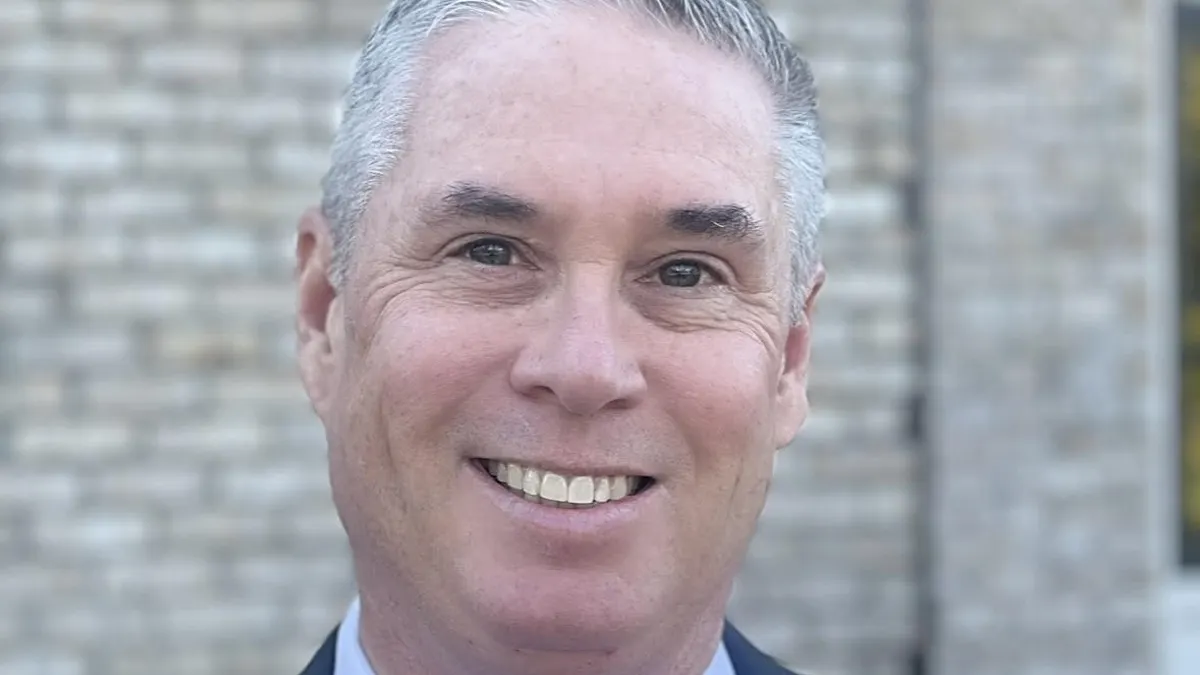
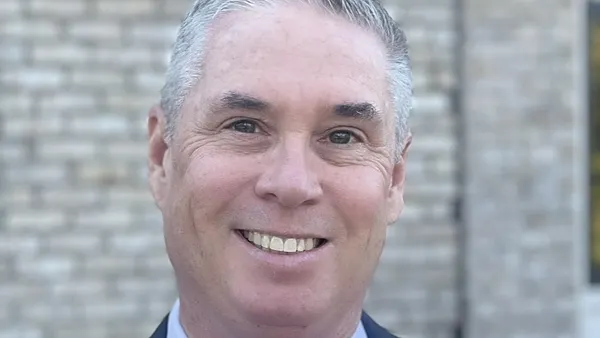
Bankruptcy attorney Jerrold Bregman, partner of the California-based BG Law, said the sale of stocks could actually be seen as good news to creditors despite the violation. Bregman has worked on bankruptcy cases for the past 30 years.
“Purchases of a bankrupt company's stock is a significant vote of confidence, because it shows there's optimism that creditors will be paid in full,” he said.
However, the main emergency motion shows creditors’ uncertainty over Wiederhorn’s ability to act in the best interest of the estate during the bankruptcy proceedings, Bregman said.
“It is wrong — in the sense of factually incorrect — for the company to argue the ad hoc committee's efforts are a personal attack on Mr. Wiederhorn,” Bregman said. “This is not personal. It's business. Creditors don't trust him to do his job, which is to maximize the value of the company's assets for the benefit of creditors and other stakeholders.”
Why Wiederhorn could be ousted
A removal or suspension of a CEO isn’t guaranteed, however, because the default practice in bankruptcy court is for management to remain in place, Bregman said.
“The same management that ran the company before the bankruptcy remains in control after the bankruptcy filing, no matter how much creditors don't like her or him, unless cause exists for removal,” Bregman said.
Cause exists if creditors can prove an executive has acted dishonestly, manifests incompetence or otherwise demonstrates an inability to act in the best interest of the estate, Bregman said.
“Job number one is to maximize the value of the estate's assets for the benefit of creditors and other stakeholders, whether through an organic restructuring, asset sales or a combination of both,” Bregman said. “Though I don't have a crystal ball, and our firm does not represent any of the litigants in this matter, and we are not participating in the mediation, if pressed, I would predict that Mr. Wiederhorn's days are numbered as CEO.”
Bregman said if Wiederhorn is removed, he could be supplanted by a Chapter 11 trustee or John DiDonato, the current chief restructuring officer. This could be decided during the mediation process or by court order in March.
“I would predict that Mr. Wiederhorn's days are numbered as CEO.”

Jerrold Bregman
Partner, BG Law
Two potential issues could lead to Wiederhorn’s removal, Bregman said. One is that Wiederhorn could be a potential buyer of the business. The second is potential issues related to potential fraudulent conveyance — gifts, like dividends, that are awarded without an appropriate reciprocal transfer of value. Over the past four years, Wiederhorn and his family received upwards of $17 million in dividends from the company, Bregman said
In addition to serving as CEO, Wiederhorn serves as chairman alongside several family members, some of whom are also executives. Wiederhorn also is a majority owner in the company.
If Wiederhorn emerges as a potential buyer of the company, creditors fear that he could lower asset value, resulting in a lower purchase price, Bregman said.
“As a buyer, he would want the assets to have as low a value as possible with the lowest resulting purchase price, while the seller's objective is to advance the best interests of creditors and other stakeholders by maximizing the value, including where assets are sold, by selling them for the highest price reasonably obtainable,” Bregman said.
Parties could review the various elements of control Wiederhorn has as CEO and shift them over to someone else to better address creditors’ concerns, Bregman said.
While no filings have been made at this time, under bankruptcy laws, creditors also have the ability to press fraudulent conveyance claims.
To recover money under such a claim, creditors would have to prove that dividends were issued when the company was insolvent, meaning it wasn’t paying debts that came due and issued a dividend anyway, Bregman said.
“[Fraudulent conveyance] would be a very contested issue in litigation,” Bergman said. “It is not necessarily evident from looking at historical financial records whether the company was insolvent at the time it paid those dividends.”