Dive Brief:
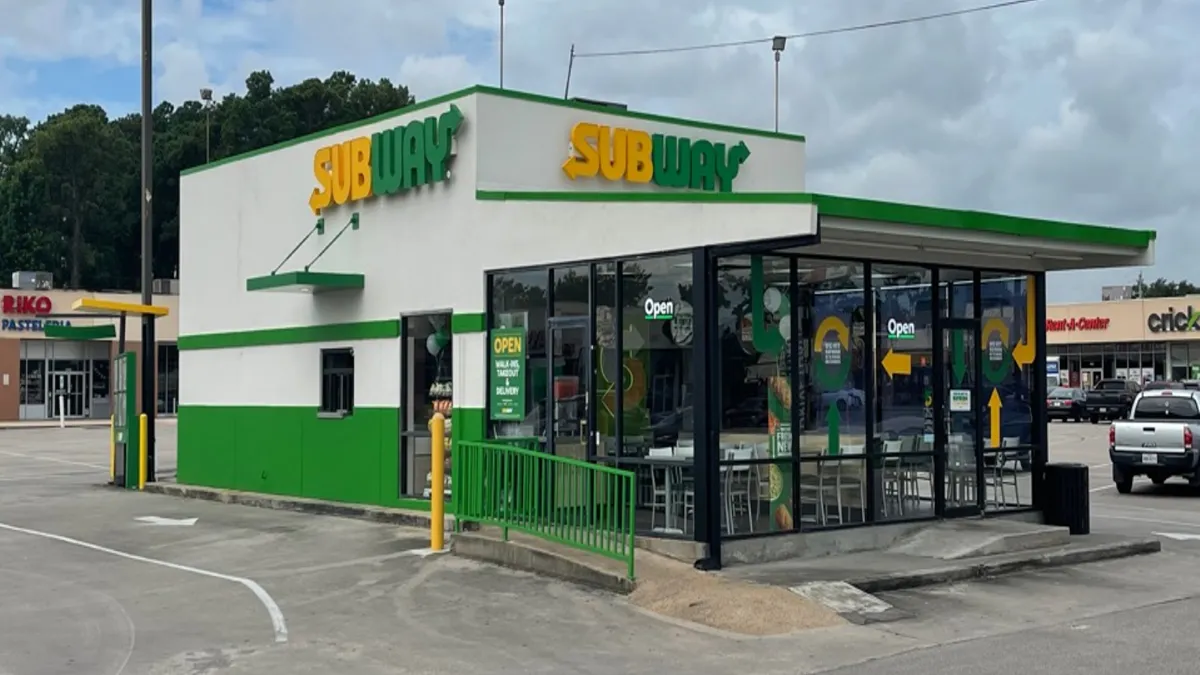
- MTF Enterprises, a Subway operator with 43 stores in Maine, New Hampshire, Pennsylvania and Virginia, filed for Chapter 11 bankruptcy protections last month, according to a court filing by the franchisee’s owner, Michael Fay.
- The operator accessed funding through short-term Merchant Cash Advance loans, which left it on the hook for a percentage of future sales.
- In October, one of the franchisee’s MCA lenders sent a notice to Stripe claiming MTF had fallen into default on its loans and claiming a lien on sales; the MCA lenders sent similar notices to Block — Square’s parent company — and American Express in December, court records show.
Dive Insight:
MTF said in the filing that the lien claims “improperly seized or interfered with the collection of sales revenue.”
Weekly and daily payments drawn by the MCA lenders was “the primary cause of the Debtor Entities financial problems,” according to Fay’s declaration.
Subway’s franchise system has continued to shrink in recent years, according to its 2025 FDD, dropping from 21,147 stores at the start of 2022 to 19,502 at the end of 2024. That decrease in store count could indicate issues with unit economics, though the brand does not disclose its per-unit sales. Fay did not say if MTF faced sales problems in the first-day declaration.
The chain has faced pushback from operators over the program’s cost of remodels, which franchisees say places a serious burden on operator finances.
MTF’s bankruptcy is not the only franchisee to go bankrupt in recent years after utilizing Merchant Cash Advance loans. Matadoor Restaurants, a Del Taco franchisee in the South, filed for bankruptcy last summer after MCA loans strained its balance sheet.
Brands have also faced increased pressure from creditors in recent years, though with different debt structures. Fat Brands filed for Chapter 11 bankruptcy last month after months of escalating repayment demands by its creditors. In 2024, TGI Friday’s bondholders executed a manager termination event against the ailing chain, seizing control of most of its assets.