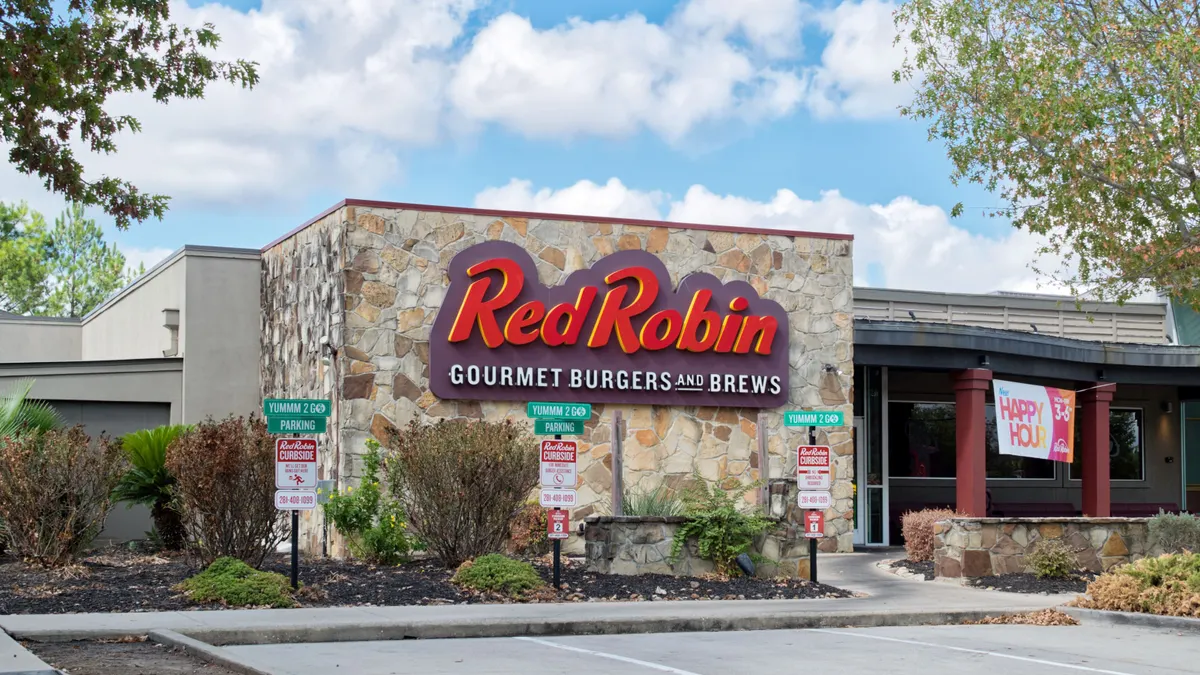
Red Robin has named Chirstopher Meyer as its interim chief financial officer, effective Dec. 1, the company said in a Securities and Exchange Commission filing. Meyer replaces Todd Wilson in the roles of principal financial officer and principal accounting officer until permanent successors are appointed for these positions.
In November, Wilson announced his resignation from his position, effective Dec. 12, after taking the role of chief financial officer at BJ’s restaurants.
Meyer has held various leadership positions at Bloomin’ Brands for over a decade, according to his LinkedIn profile. He most recently served as executive vice president and chief financial officer from April 2019 to April 2024. He also held the roles as group vice president, finance, treasury and accounting, and group vice president, financial planning and analysis and investor relations.
As part of his interim appointment, Red Robin entered into an independent contractor agreement with Meyer. The agreement lasts until May 31, 2026, unless earlier terminated or extended. He will receive $20,000 in compensation weekly, but will not receive any employee benefits as an independent contractor.
Red Robin, which posted same-store sales declines of 1% during the third quarter, is in the midst of a turnaround strategy. Dubbed the First Choice Plan, the move is meant to improve its capital structure, traffic and sales and restaurant system. It is likely Meyer will be involved in the chain’s efforts to strengthen its balance sheet.
During the company’s November earnings call, Red Robin CEO, President and Director David Pace said the chain extended the term of its current credit agreement for six months, allowing the company time to complete its turnaround. Additionally, it engaged Jefferies to help refinance debt.
The brand also created an at-the-market program that will allow it to sell up to $40 million in equity through open market transactions. While Red Robin may choose not to execute this option, the program would allow it to generate funds if needed and to move more quickly if it sees “compelling opportunities,” Pace said.
The chain, which has a predominantly company-owned system, is also engaging in refranchising and may sell up to 15% of its company-owned stores. Out of its 480 restaurants, 90 are franchised-owned.