2025 was a transformational year for Krispy Kreme: it sold its remaining stake in Insomnia Cookies, ended its partnership with McDonald’s after finding the venture unprofitable, launched a turnaround plan and refranchised its company-owned stores in Japan to help pay down debt.
While its turnaround focuses on boosting profitability, refranchising, improving return on invested capital and expanding margins, that doesn’t mean the brand is weak or facing a crisis, CEO Joshua Charlesworth said in an interview at the ICR Conference.
“I've been at Krispy Kreme eight years now, and one thing I've learned is every day is an exciting day, because it's an exciting brand,” he said.“The fundamental challenge we have is just getting the doughnuts to people in the right way that meets their convenience needs and access needs, but also is profitable for us in sustainable revenue streams,” he said.
The focus on profitability is helping. The company is reducing its leverage, creating more positive free cash flow and posting higher adjusted EBITDA, according to its third-quarter earnings release.
“We’ve only publicly seen one quarter of results … and they look good,” Charlesworth said. “We're looking forward to providing a continuous stream of positive updates on our turnaround.”
Restaurant Dive spoke with Charlesworth about the turnaround plan’s progress, Krispy Kreme’s international refranchising and growth strategies and how the chain is expanding its reach in the U.S.
Editor’s note: This interview has been edited for brevity and clarity.
RESTAURANT DIVE: What did you learn after your McDonald’s partnership ended and you focused on a new turnaround strategy?
JOSHUA CHARLESWORTH: It seemed like an exciting opportunity. We sold millions of doughnuts through McDonald's during that initial phase of the rollout.
What we identified, which is so important, is the conditions have to be right for it to be sustainable. The visibility of the doughnuts has to be there, and the traffic has to be there in all the locations. I think ’25 was a tough year for us in that we really were reminded of that. The brand has remained healthy throughout and therefore it was a tough decision to exit from McDonald's, but one that had to be made quickly, and then [we had to] pivot to making sure only profitable income streams [survived].
What's good is we have them. We've got them in the U.S., particularly with the grocery and mass merchant chains like Walmart, Target, Costco, Kroger and Publix, all fantastic customers that we're growing profitably with.
Internationally, we have a lot of franchise partners that do really well. We opened up in ’25 in new markets like Brazil and Spain. That proved that [we should go after] forms of growth which are more profitable, more sustainable.
So announcing our turnaround and then going down that path was an important pivot for us. We’re in the heart of that right now. We’ve seen some early wins, but now we need to continuously bring updates on that.
In terms of the turnaround, do you see that as resulting in more shops or more expansion in the retailers?
It's a combination. Because we're in all those channels whether it's digital, the doughnut shop, or through retailers. There's a real opportunity to open a lot more shops with established franchisee partners internationally. We recently announced the refranchising of the Japan market, and as part of that, we have a development program with them to open new shops. We are opening shops in several markets in ’26, but mostly internationally. Domestically, it's more about the off-premise [channels], because we've got a lot of excess doughnut capacity that we can use, so we don't have to build new shops.
Why do you see more potential to grow shops internationally?
It’s a combination of white space and capital requirements. I think we've got more franchisee partners internationally. In the U.S., most of the business is company-owned, and [we] don't need to open new shops to grow now.
Minneapolis was almost the exception that proves the rule. We opened this incredible shop [last year] and it has an incredible response that shows we can open shops ourselves in the U.S. But right now, we don't need to. We can grow with these other partners’ profitably and, over time, build that momentum there. In time, I think there's an opportunity to open doughnut shops again in the U.S., but we're not going to rush to it. That's one thing I learned from 2025 is not to rush to growth.
Do you see Krispy Kreme doing franchised growth domestically?
We're not working on it right now. It could play a role in select markets over the longer term. But our focus is on running the company operations better, making them more profitable, really leveraging the excess doughnut capacity that we have.
We’re in the process of outsourcing logistics in the U.S., and we really want to have that program complete, because running a logistics company and a manufacturing company and a retail company all at once was a lot. Being able to outsource that is a big unlock. We want to focus on all those things before we look at significant franchising in the U.S.
Can your current facilities handle the demand you’re seeing for doughnuts in the U.S.?
I think they can handle it. What's important is not so much the doughnut making, but that the doughnut delivery is set up. And that's where this third-party logistics change is really important. The cost of delivery really soared in the last two or three years. And some of that was just general industry-wide, but also we were trying to do something that we're not experts at.
By outsourcing to people who understand fleet management, delivery technology, the use of AI in that sphere, and managing things like safety, liability, insurance and lawyers, we found that we can get really good quality and service levels, particularly the right cost on casualty insurance — it's quite significant just managing accidents insurance. It’s very challenging, and it's been our biggest headwind. Being able to have that liability transferred to them, and them understanding how to manage that in-house with drivers with much lower turnover, who are building a career in driving, I think that's the biggest unlock. We've done just over half of the system, and we expect that to complete this year.
Following the Japan refranchising deal, do you expect to do more refranchising abroad?
The U.K., Australia and Mexico, are all company owned. We would like to bring in a partner, because we found that partners are the best operators. Partners understand the real estate market better, so why not have them make the financial investment as well? And of course, they get a greater slice of the reward. Our job is to make sure the brand is great, the innovation pipeline is good, and we're bringing in an awesome doughnut experience. We don't always know the ins and outs of how to run an Indian company or Australian company, versus the team on the ground.
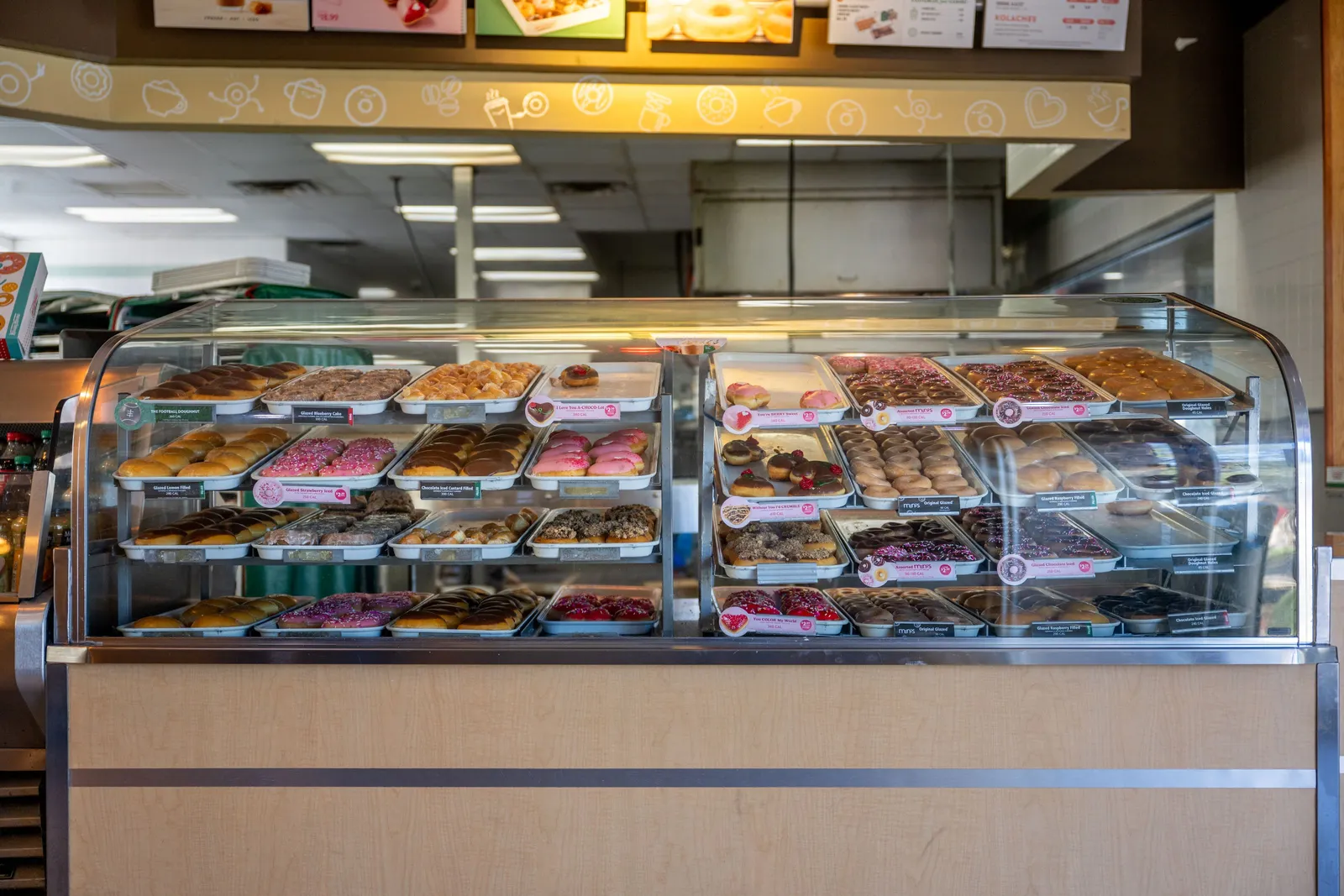
How are you setting up doughnut operations internationally to ensure they taste the same in the U.S.?
The way it works in the U.S. is we make the doughnut mix with some secret ingredients that go back to the original, iconic recipe from when the company was founded. That is distributed from two facilities, which we manage across the U.S. And that's why every doughnut is exactly the same.
Internationally, what we do is we take that secret formula and we call it a concentrate, and we actually do the same. So we actually prepare that in North Carolina, and then we send it to 42 locations around the world. Then, they add all the additional local ingredients to our specifications. And that's why, if you have an Original Glazed in Seoul, Korea, or in Delhi or in London, it'll be the same as in Winston-Salem, North Carolina, because it's made of that secret recipe that we have controlled.
The doughnuts themselves are made in the local doughnut shops, or sometimes in a non-customer facing commissary, on a machine that was also built in North Carolina. And so every doughnut line in the world was built in North Carolina and shipped around. People always say, “why don't you get them in a low labor cost place?” We are the doughnut people. We’re nothing without the doughnuts and that brand. So we have complete control over that supply chain.
We hold the franchisees to very high standards to make sure the experience is the same wherever you go. Sometimes, we might have some different toppings and different flavors because a lot of it's hand decorated, but not the core doughnut.
In terms of your turnaround plan, how are you approaching your debt and all the elements weighing the company down in 2026 and 2027?
The turnaround plan is designed to bring profitability quickly. We were very decisive in the third quarter last year around our cost base. We had to make an intervention on our G&A, unfortunately. We needed to pull out very quickly any operating expenses related to that McDonald's expansion, and really any delivery location that wasn't profitable. We announced 1,400 places where we have stopped delivery, but we're still adding new ones. We were being really ruthless that they have to be profitable.
Profitability leads to cash, and cash allows you to pay down debt. We want to show a stream of positive cash flow, which I think will be reassuring for people as we pay down our debt. We've got lots of liquidity, and we don't have any liquidity issues. But versus our profitability, the debt was relatively high, and we wanted to bring that down.
Within the business community, when you see the stock price move around as it has been, people get anxious. They look at the debt, which is why we’re so focused on being a bit more boring in 2026. Let’s show continuous EBITDA improvement and positive cash flows. Let’s show the brand is growing, and we’re opening up in proven places.
In 2027, there might be an opportunity to then move away from a turnaround plan, and more to a long-term profitable growth plan. I don't think we'll get distracted from the doughnuts, but I'll give an example. In the Middle East, we're expanding with KFC, and we're finding that to be a successful combination. Maybe in the long term, there will be other opportunities.
But ’26 is the year of “let's get a bit more boring.” Let's knock it out with some good results.