International restaurant brands have been expanding into the U.S. for years, with chains like Din Tai Fung and Jollibee establishing strong footholds. But the pace is accelerating, putting pressure on established brands to up their game.
“The phenomenon of international restaurants expanding throughout the US market is not new,” said Huy Do, trendologist and research and insights manager at Datassential.
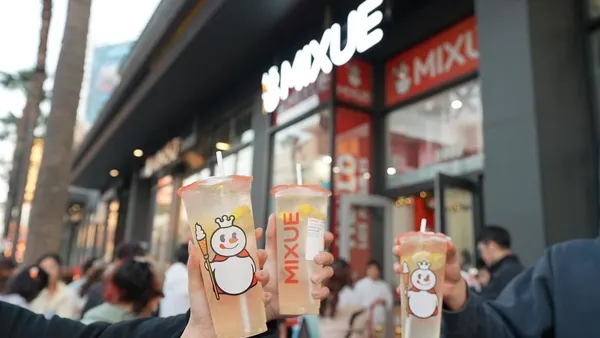
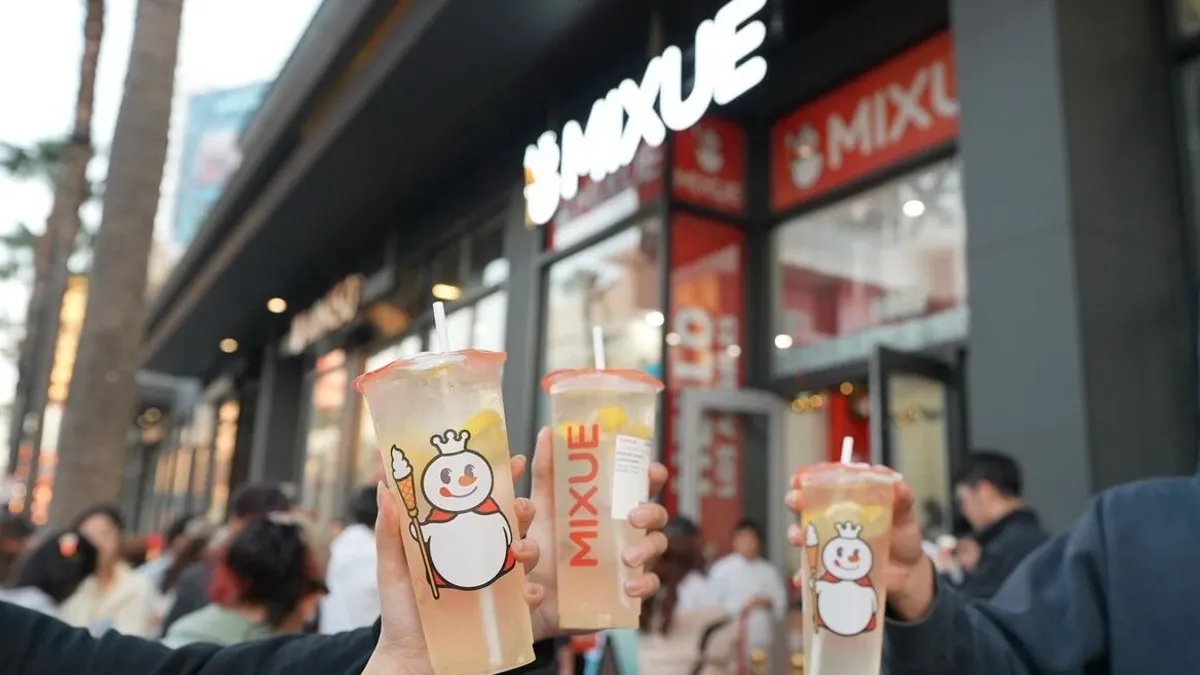
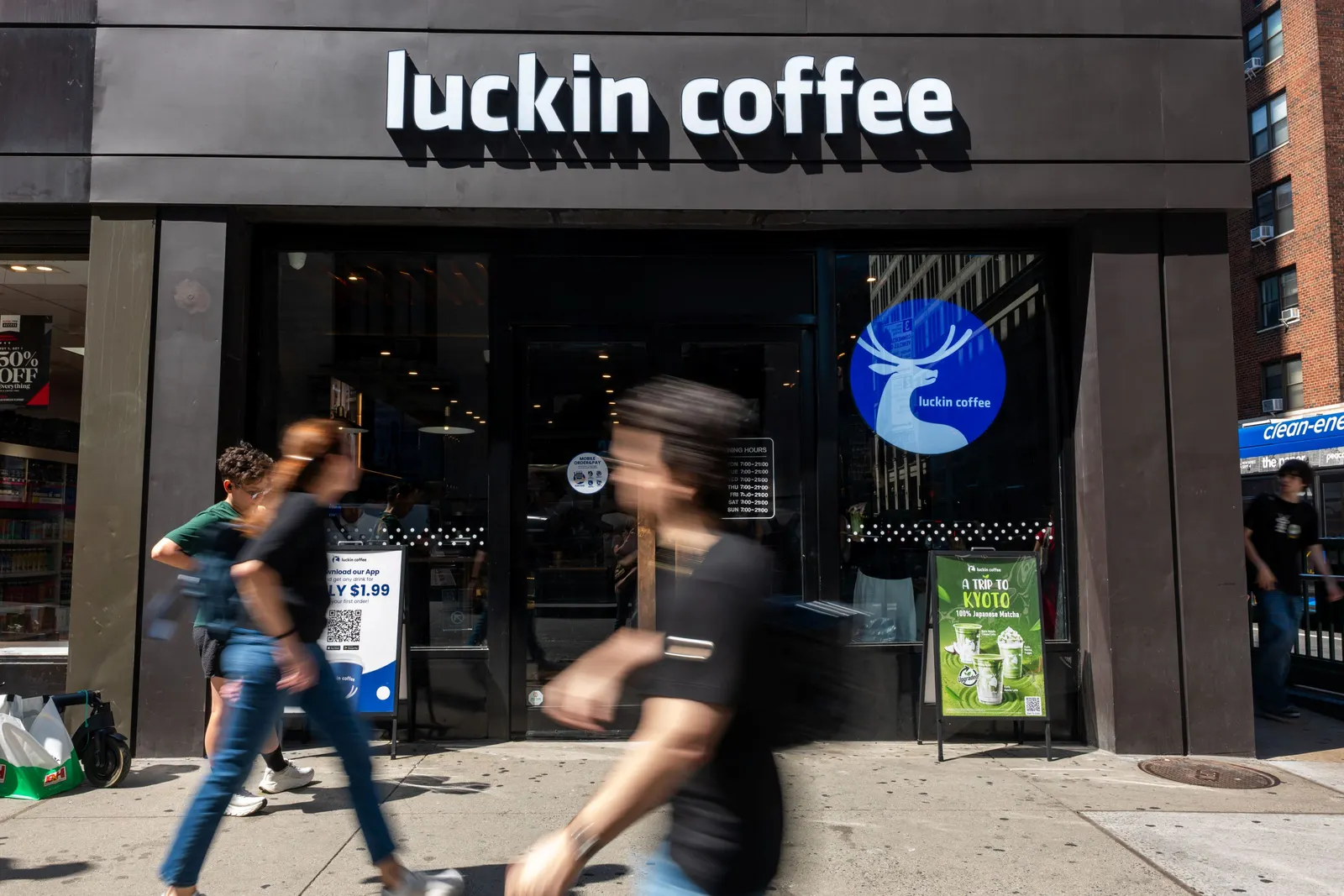
What’s noteworthy is that some of the largest restaurant brands in the world — many originating in East Asia — are entering the market now. Last year, Mixue opened its first U.S. location in Los Angeles and New York City, while Luckin debuted in New York City.
The timing reflects a few converging factors.
Non-alcoholic beverages and desserts are among the fastest-growing menu categories in the U.S., with consumer enthusiasm for specialty coffee, tea, matcha and desserts running high.
Brands like Luckin Coffee and Mixue, meanwhile, built efficient franchise models and digital-first operations in their home markets and are now targeting the U.S., a massive, stable market that’s friendly to chain restaurants and franchising.
“It’s dynamic. You’ve got tons of competition, but we’re also a market that’s really receptive to a lot of new concepts,” said Geoff Henry, president of the Americas at Gong cha, a Taiwan-based bubble tea chain operating nearly 2,200 locations in 33 countries. The chain has over 150 units in the U.S.
It’s a greenfield opportunity for brands that have saturated their home markets, experts say. The opportunity is especially compelling for brands in categories like beverages and desserts, as competing in a relatively unsaturated category is a very different equation than entering an established one, like burgers.
Many of these brands are expanding rapidly by deliberately opening several locations simultaneously to accelerate growth and “burn a path” to brand recognition, which is why the latest wave feels different, said Hope Neiman, CMO at Tillster, which provides commerce solutions for QSR and fast-casual brands.
Responding to trends, not creating them
International brands are mostly responding to changes in consumer preferences rather than driving them, though there is a natural feedback loop. The products these chains offer — specialty coffee, bubble tea and frozen desserts — are already familiar to American consumers thanks to a decade of smaller operators building awareness.
“They are not driving new trends,” Do said. “It’s advantageous for them to move now because Americans have become a lot more familiar with those concepts.”
Social media may be accelerating those trends, as U.S. consumers are increasingly exposed to brands and experiences from around the world. Influencers, rather than paid social media, are having the most impact, with creators evangelizing products like boba to new audiences.
Cultural forces, such as the popularity of K-pop, have also helped fuel interest in Asian food and beverage brands.
Quality, experience and value
Many international brands are appealing to U.S. consumers — often first in diasporic communities, where customers are already familiar with the brand — by focusing on food quality and experiential differentiation.
Food quality is “overwhelmingly becoming the most important part, even beyond value” for consumers choosing where to eat, Neiman said.
That experience takes several forms. Din Tai Fung’s glass-walled kitchens, where diners watch cooks hand-fold dumplings, and interactive formats like hot pot and conveyor belt sushi chains are examples of experiential dining concepts pioneered outside the U.S. that are gaining traction domestically.
These brands create environments where consumers feel their money is well spent, Neiman said, adding that these experiences make customers prefer to eat out rather than dining at home.
But some players, especially those focused on beverages and desserts, are trying to win over consumers by offering greater value, with brands like Luckin Coffee undercutting Starbucks’ prices.
Digital-first operations
International entrants are also competing on technology. Many built digital-first operations in markets like China, South Korea and Taiwan, where the digital experience is further along than in much of the U.S.
At Gong cha, 90% of in-store transactions now go through self-service kiosks, where consumers can customize drinks down to ice level, sweetness and toppings, Henry said. The company has also deployed AI-assisted automated dispensers that cut drink preparation time from roughly 90 seconds to 30.
“Digital is a critical element across the board with these brands,” Neiman said.
As a result, established brands are updating their menus, while pushing franchise operators to upgrade their restaurants and elevate food quality, but “they’re still trying to figure it out, to tell you the truth,” Neiman said.
U.S. coffee brands, for example, are trying to get into bubble tea and failing because it's a fundamentally different process, Henry said. Making pearls properly takes 45 minutes, and without the volume and throughput these specialty brands have, competitors default to inferior popping pearls or flavored substitutes, giving brands like Gong cha a competitive edge in terms of quality.
For now, the latest wave of international brands entering the U.S. is concentrated in coastal markets and major metros, with beverage and dessert concepts leading the way. But that footprint will grow as consumer tastes evolve and new brands build awareness through social media before they even open U.S. stores.
“It’ll be very interesting to see how quickly they expand,” Do said. “But I have very few doubts about their ability to open a ton of locations here.”