Dive Brief:
- Gong cha, a bubble tea concept with over 2,200 units globally, has acquired 170 U.S. locations from a master franchisee, a majority of its roughly 240 stores in the country, the company said Monday.
- The agreement, Gong cha said, will allow it to eventually strengthen its U.S. franchising system and accelerate its growth, according to the press release.
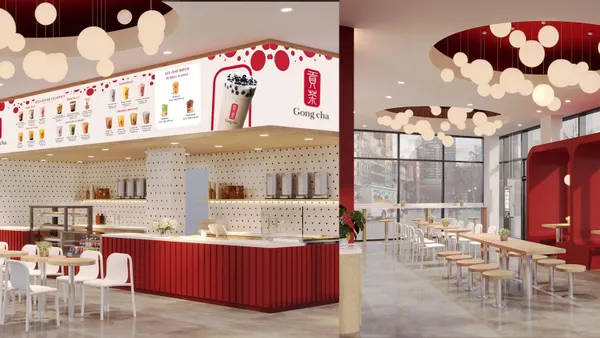
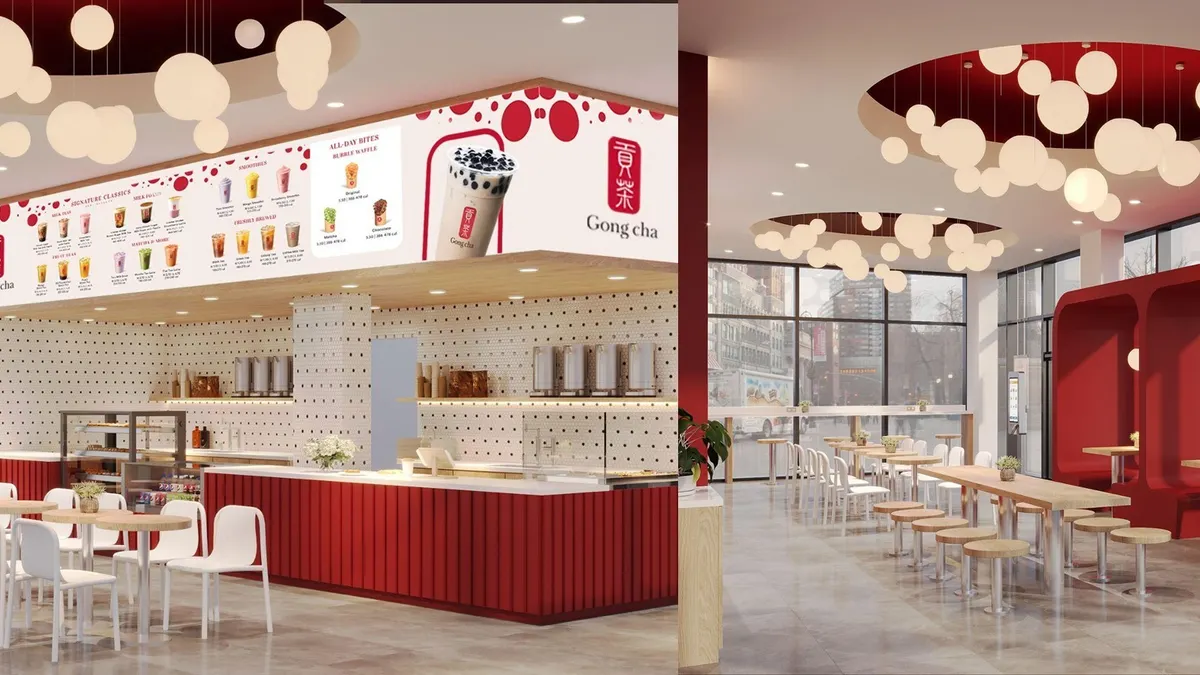
- Gong cha recently announced an overhaul of its store model and operations that includes a new automated drink-making platform that cuts prep time for drinks by roughly a minute, the company said in a separate press release. This technology could help it take advantage of the expanding cold beverage market in the U.S.
Dive Insight:
Gong cha’s acquisition of the bulk of its U.S. franchised locations could help it implement strategic decisions more rapidly in the U.S. as it pushes to develop 1,000 units in the country. Gong cha could face stiff competition as other Asian brands like Mixue, and domestic chains like Dutch Bros and 7 Brew, continue to expand their drink concepts nationwide.
“Bringing this territory in-house allows us to further sharpen our development strategy and strengthen support for our franchise partners,” said Geoff Henry, the company’s president for the Americas.
Henry said this would be achieved by engaging large, multi-unit developers and strengthening the brand’s national supply chain network to reduce costs for franchisees, while also giving the company greater control over its digital tools.
The overhaul announced earlier this year, Gong cha 2.0, includes a new drink-producing system called the Super Wu, which is named after Gong cha founder Wu Zhenhua, according to the press release. This new operations system is meant to improve franchisee profits and the ability to scale.
Gong cha did not state in the press release whether it intended to eventually refranchise these 170 stores to different multi-unit operators. The beverage brand’s statement that it planned on “engaging larger multi-unit developers,” indicated refranchising is a likely outcome of the acquisition; this would be reminiscent of the moves made by other QSR chains in the U.S.
Burger King, for example, bought about 1,000 restaurants in its acquisition of Carrols Restaurants, which gave the brand the ability to speed up the deployment of its new initiatives and prototypes, and to improve overall unit economics. The RBI subsidiary is now in the process of refranchising some of those stores.