
Following the high-impact "Year of the Sphere" deep dive on March 27th, one thing has become remarkably clear. Molecular gastronomy has reintroduced itself from the novelty category into the essential toolkit of the modern kitchen. For today’s culinary leaders, the industry focus i moving towards a practical, grounded science of texture and form.
As the foodservice industry enters a new era of experience-driven dining, understanding the logic behind the sphere is the key to elevating the guest narrative. While these methods have long existed in the culinary world, modern applications offer a level of consistency and control that makes them increasingly viable for diverse environments. Whether operating a high-volume kitchen or an intimate boutique space, these techniques provide a structured approach to menu innovation. Here are the three critical takeaways from the recent industry webinar featuring Kikkoman Kitchen Cabinet Chef Evan Gonzalez and Kikkoman Executive Chef Andrew Hunter.
1. Texture as a tiered flavor release
In an increasingly competitive market, restaurant operators need to capture the attention of a broader audience via innovative techniques. The deliberate delivery of that flavor is what creates a repeatable, memorable dining experience. Spherification, which is the process of shaping a liquid into squishable spheres, offers a unique burst that elevates traditional plating.
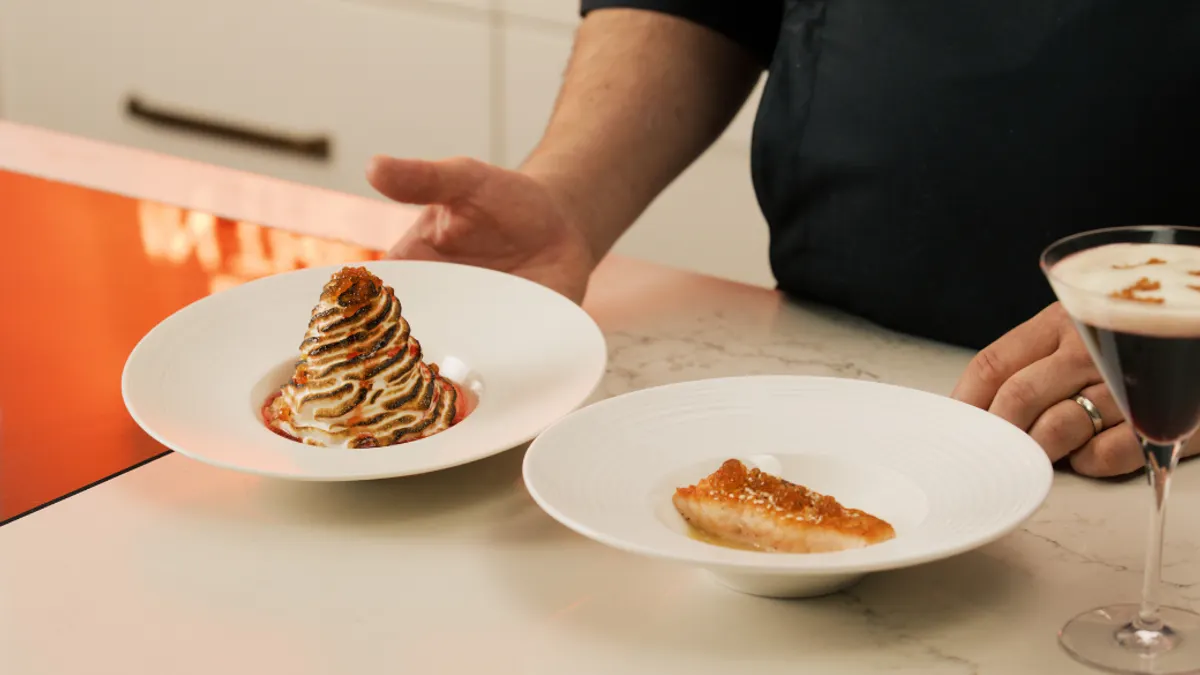
Chef Evan demonstrates how using these "spheres in action" allows a chef to elevate the narrative of a dish by controlling exactly when a flavor hits the palate. By reimagining the relationship between texture and form, culinary teams can create a tiered, layered tasting experience. Instead of a sauce soaking into the base of a dish, specific flavor profiles are released as a deliberate accent only when the diner chooses, aka when the “flavor bubbles” pop.
2. Agar Agar: reintroducing a master technique
While there are several ways to achieve a spherical form, Chef Andrew is reintroducing a classic method that relies on the unique properties of agar agar. This plant-based gelling agent allows for a high degree of control and stability. The process begins by carefully chilling a container of neutral oil while simultaneously heating a custom flavorful blend.
Once the liquid reaches the proper temperature, the chef whisks in the agar agar to create a cohesive mixture. From there, the technique utilizes a temperature-controlled transition. Using a dropper or squeeze bottle, the cook gently pours small droplets into the chilled oil. The slow descent through the cold oil is exactly when the spheres begin to set and take their final shape. This technique is favored for its reliability and its ability to hold up under various service temperatures, making it a versatile choice for a busy line.
3. Moving toward ‘functional form’
The future of food is not just about what is served. It is about how the guest experiences it. Beyond the undeniable visual appeal, kitchens can use spherification to solve practical, everyday challenges that go far beyond aesthetics.
Whether looking for ways to prevent delicate sauces from separating during a long service or seeking to create high-impact garnishes that dramatically reduce plating time during a rush, these innovations are becoming standard practice. By mastering these "well-rounded" techniques, culinary professionals can stay ahead of the curve while providing a level of flavor innovation and professional finesse that sets a menu apart from the competition.
Missed the live demonstration?
The full "Year of the Sphere" session, featuring live technique tutorials and behind-the-scenes insights from industry pros, is now available for on-demand viewing here.