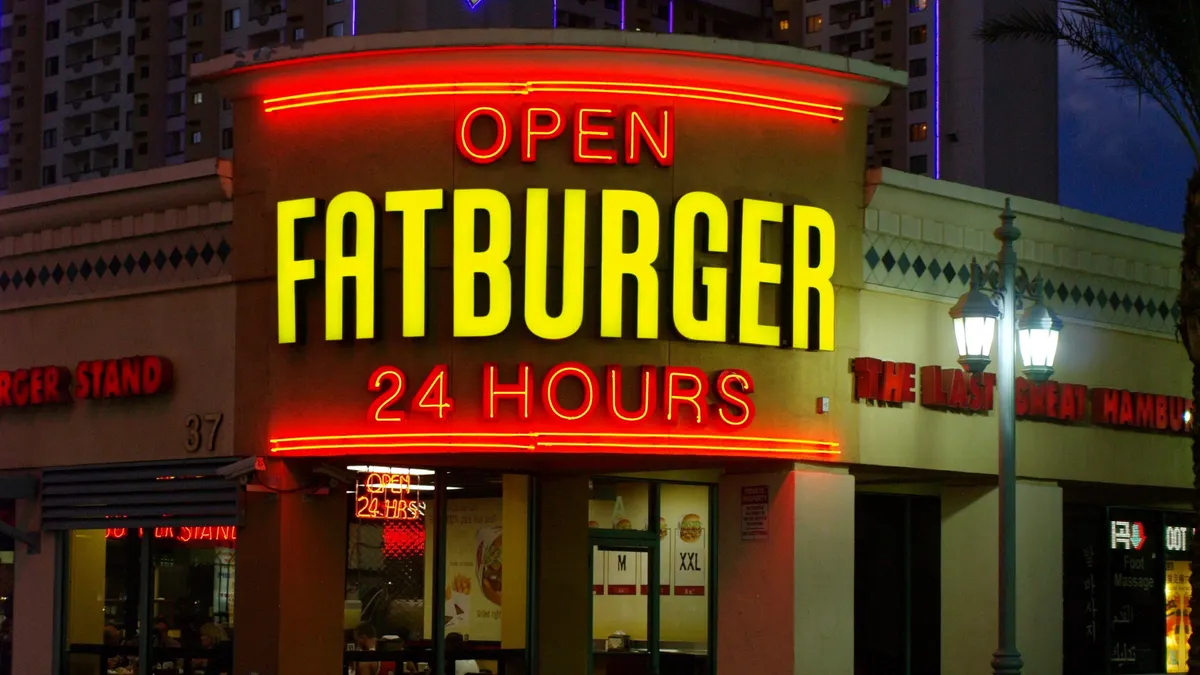
Over the past few years, Fat Brands built up a 19-brand portfolio through acquisitions of chains like Round Table Pizza and Johnny Rockets. But those deals came with a significant cost: over $1 billion in debt. While Fat was growing quickly, creating a development pipeline of 1,000 units, economic conditions soured. Consumers pulled back on spending, leading to declines in same-store sales and revenue. Fats’ creditors began demanding debt repayment last year.
Ongoing litigation drove up costs, and the company’s inability to restructure its debt compounded its financial situation. This week Fat Brands, along with its subsidiary Twin Hospitality, filed for Chapter 11 bankruptcy protections.
“Because the Debtors have exhausted most of their liquidity, they have determined that seeking relief under chapter 11 and continuing their efforts to develop a value-maximizing plan while under the protection of the Bankruptcy Code is the best approach for the Debtors to maximize value for all stakeholders,” Chief Restructuring Officer John DiDonato said in a first day motion filed on Tuesday.
Restaurant Dive took a closer look at Fat Brands’ first-day motion to learn more about the forces that drove the company bankrupt.
Challenging economic conditions
Much like the rest of the restaurant industry, inflationary pressures and economic uncertainty impacted Fat Brands and its operations, hurting its cash flow, DiDonato wrote. Since the pandemic, consumer preferences have shifted away from dine-in toward off-premise channels, including delivery — and orders through that channel often come with high fees for restaurants.
“Heightened rates of inflation coupled with stagnating wage growth have made consumers increasingly cost-conscious, and dining preferences have begun to shift to more cost-efficient alternatives,” he wrote. Low-income and middle-income families have also reduced spending.
Tariffs also increased production costs at the company’s Atlanta factory, where Fat makes cookie dough products for Great American Cookies and dry mix for Pretzelmaker. The war in Ukraine has disrupted supply chains and led to higher prices, and labor costs have increased because of the tighter foodservice labor market, DiDonato said.
Fat Brands also relies heavily on opening franchised stores. It built a development pipeline of roughly 1,000 stores in recent years, but economic uncertainty, changes in diner preferences and tariffs led to increased costs for franchisees seeking to open new locations. Thus, the new unit growth has slowed and Fat Brands has not met its projections. Without royalties and other fees from these franchisees, Fat’s revenue growth slowed, DiDonato said.
Ongoing litigation
A few days ago, Twin Hospitality’s largest bondholder, 352 Capital, sued the company for over $100 million due to a “breach of contractual obligations” after failing to deliver Class B Common Stock as per a previous agreement, according to the complaint. That lawsuit could have been a late factor leading to Fat and Twin filing for bankruptcy protections this week, though it wasn’t mentioned in the first-day motion.
Additionally, Fat Brands its CEO and Chairman Andy Wiederhorn faced an investigation by the Department of Justice and U.S. Securities and Exchange Commission starting in 2021, DiDonato wrote. That led to an indictment related to fraud allegations. While the DOJ dismissed the charges last year, the investigations still resulted in significant legal costs to defend, DiDonato wrote.
Civil lawsuits, including various class action suits and derivative suits in the Delaware Court of Chancery, have been ongoing. While some derivative suits were settled on Dec. 17, Fat Brands expects more lawsuits. These lawsuits and other legal issues led to about $85.5 million in legal costs since 2021, DiDonato said.
The Chapter 11 process also protects the company from litigation challenges, collection actions and foreclosures, which will help Fat focus on its restructuring efforts rather than legal battles.
A complicated and costly debt structure
As Wiederhorn said earlier this month at the ICR Conference, Fat’s debt structure, which holds a combined principal balance of about $1.4 billion, according to the first day motion, is very complicated. Most of the debt consists of notes issued through five subsidiaries, with various creditors holding different positions. This complexity has made it difficult to reach a consensus with creditors to refinance and restructure. This debt is non-recourse, which means the borrower is not personally liable if a loan defaults, and secured by different brands. But this debt proved to be more expensive, as creditors establish higher interest rates to insulate from the increased risk they take on with this type of debt.
Debt service became even more expensive beginning in 2023, when Fat failed to pay Securitization Notes by “applicable call dates” that led to a penalty costs, DiDonato wrote in court filings. Fat ended up paying $72 million in penalty interest and penalty amortization since the end of 2022 on its securitization notes.
“In part because of the significant increase in debt service obligations, the Debtors no longer have the necessary cash flow to run their businesses,” DiDonato said.
The company tried to improve its liquidity through non-securitized debt, equity raises, additional sales of securitization notes, and underspending on advertising, but Fat exhausted its ability to incur additional debt or raise equity as its trustees froze its ability to do so.
Fat’s liquidity is limited, and as of Jan. 23, it had $2.1 million in unrestricted cash and about $19.9 million of cash held in restricted accounts not under Fat’s control, DiDonato said.
“The Debtors are, thus, unable to continue operating their business in its current state or even think about investing in their brands and growing their franchises to generate cash to repay the Securitization Notes,” DiDonato said. “The Debtors’ capital structure is no longer sustainable.”