An aging U.S. population will reshape the restaurant industry in the years ahead, experts say.
A major demographic shift is on the horizon, with all Baby Boomers reaching retirement age by 2030. People aged 65 and older will comprise 25% of the total U.S. population by 2060, up from 18% in 2025. At the same time, people under 30 will make up 31% of the total U.S. population by 2060, down from 38% in 2025.
As a result, people aged 65 and older will account for 18% of all U.S. restaurant spending in 2030, up from 10% in 2025.
That could pose challenges for the restaurant industry. Customers aged 20-33 are “the sweet spot” for foodservice visits because they are usually employed and eat out more often, said David Henkes, senior principal and head of strategic partnerships at Technomic.
But focusing too much on younger consumers can be costly.
“Sometimes restaurants get so hung up on targeting younger, up-and-coming consumers that they lose sight of their core guests,” Henkes said.
Dining behavior is primarily driven by life stage rather than age itself, however, even though the two dynamics are often related.
“My own view is that it follows more the stage of life,” said Chad Moutray, senior vice president for research & knowledge and chief economist at the National Restaurant Association. He noted that as consumers take on mortgages, children and other obligations, their dining patterns tend to follow similar trajectories regardless of generation.
In addition, while older consumers dine out less frequently, they spend substantially more per visit.
“They’re the ones getting appetizers, dessert and maybe alcoholic beverages,” said Ashley Mitchell, VP of marketing for East Coast Wings + Grill. “They’re less price sensitive and more experience driven.”
Gen X is particularly valuable, despite being a smaller cohort than Baby Boomers or millennials, because they are in their peak earning years and have high discretionary income.
“Purchasing power beats the head count for profitability,” said Philip Daus, partner and head of the Houston office at Simon-Kucher.
At East Coast Wings, Gen X consumers are among the chain’s most reliable guests, frequently driving higher check averages, Mitchell said.

Off-premise habits harden
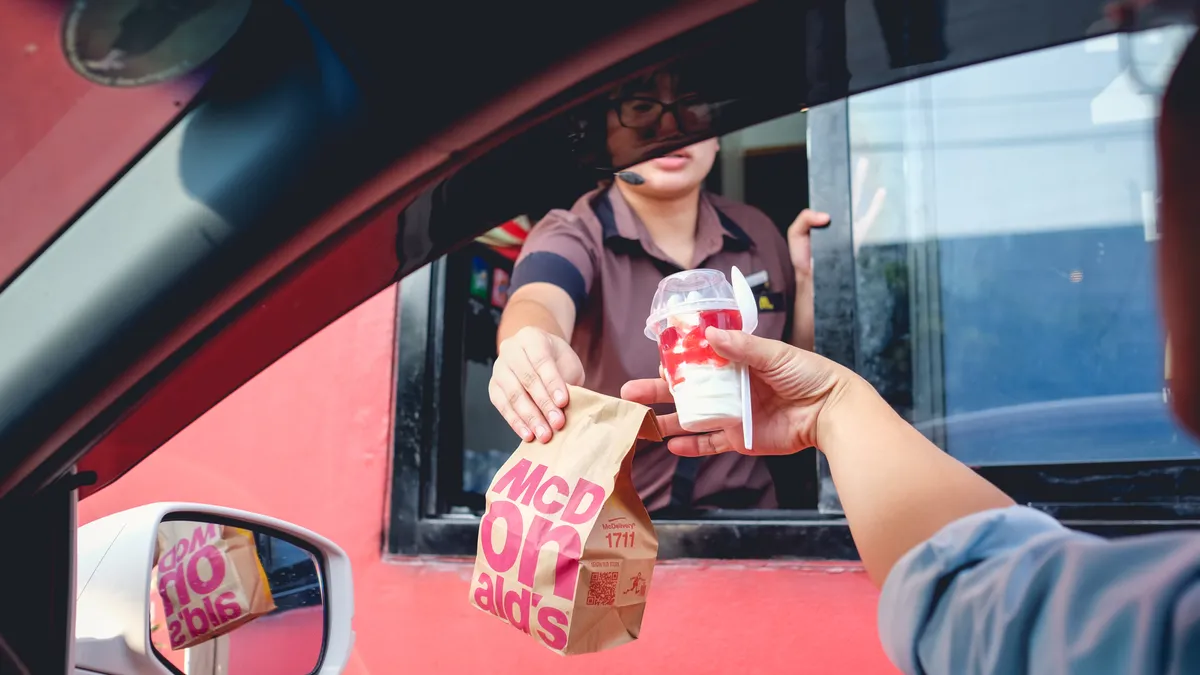
In addition, off-premise dining has taken off across full- and limited-service restaurants, regardless of age.
“We certainly have seen an uptick in to-go orders across the board, and it has not gone back down,” Mitchell said.
And, thanks to inflation, more customers are picking up their food to avoid delivery fees and tipping, Daus said. He recommended operators design stores to accommodate pickup, delivery and dine-in simultaneously, while building menus around food that travels well.
As younger consumers who grew up with digital ordering age into higher income brackets, their comfort with off-premise dining is unlikely to fade.
“We all like the convenience of being able to order out,” Moutray said.
Don’t call customers ‘old’
As the U.S. customer base ages, operators must adapt physical spaces and menus. However, focusing on accessibility rather than age is essential to serving aging consumers without alienating them.
“No one likes to be called old,” Daus said. “The opportunity isn’t to become senior-focused. It’s to become frictionless.”
Clear signage, legible menus, comfortable seating and a reasonable amount of noise are crucial to ensuring that all guests have a great experience.
East Coast Wings, for example, is redesigning its menu with a focus on legibility and clarity, while also balancing acoustics inside its restaurants to maintain energy without overwhelming guests.
“Accessibility to us is not just about aging consumers. It’s about being accessible for all,” Mitchell said.
Rather than offering age-targeted promotions like senior discounts, East Coast Wings uses daypart strategies that appeal to anyone whose lifestyle fits an earlier dining window.
“We look at it more as a daypart, as opposed to targeting it to a certain age,” Mitchell said.
Personalized offers also allow brands to provide different offers to individual consumers without broadcasting age-specific deals.
"The beautiful thing about these apps and the technology is that you can be very targeted with your approach," Henkes said. He sees opportunity for a more "bifurcated approach" that gives older guests something distinct from younger ones.
Operators should consider moving beyond demographic segmentation toward occasion-based strategies, experts say. That’s because the same consumer may behave differently when ordering lunch alone on a weekday versus dining with family on the weekend. Designing around those occasions can drive additional business, regardless of age.
“The brands that win are going to be the ones that can deliver on things that go across generations. Those are the ones that will have longevity,” Mitchell said.
Disclosure: Technomic is part of Informa, the company that owns a controlling stake in Informa TechTarget, publisher of Restaurant Dive.