More quick-service restaurant brands are exploring catering due to the promise of larger checks, incremental revenue and new customer acquisition. But experts say success depends on recognizing that catering is a distinct business with different customers, economics and operational demands — not simply a scaled-up version of takeout.
At Moe’s Southwest Grill, catering has become an important and expanding part of the brand’s business. GoTo Foods' portfolio of brands, including Moe's, has posted four consecutive years of double-digit growth in catering sales. Catering orders are often 10 times more valuable than a standard transaction, creating meaningful upside when executed properly, according to Mike Smith, Moe's chief brand officer.
“We really think there’s more room to run there,” Smith said. “Catering orders tend to index at a much higher price point than a standard order.”
GoTo Foods' catering experience mirrors what experts see across the industry. Catering can account for 5% to 10% of total restaurant sales for operators that commit to it, with higher penetration possible in dense office markets or for brands that serve family and group occasions, according to Philip Daus, partner and head of the Houston office at Simon-Kucher, and John A. Gordon, a principal of Pacific Management Consulting Group.
Catering is not takeout
But experts stress that catering only works when restaurants treat it as its own line of business. Many operators stumble by assuming catering customers behave like individual diners, when in reality they are buying on a per-person budget and prioritizing reliability, simplicity and ease of ordering, Daus said.
“Catering is not a bigger takeout order. That’s typically where the pitfall is,” Daus said.
The buyer is often not the end consumer, which further changes the dynamic. Catering orders are frequently placed by executive assistants, office managers or other gatekeepers who manage vendors and invoice approvals. Building trust with those decision-makers is critical, especially because catering purchases involve much larger financial commitments than a typical meal.
“Catering is very much a relationship-driven piece of the business,” Smith said. “There is a ton of trust that goes on when someone’s placing a significantly larger order with you.”
Because of that trust gap, catering customers are far less forgiving of mistakes.
“With catering customers, you only get one shot,” Smith said. “Either you invest in all the things it takes, or you stay out of the business.”
Operational challenges
From an operational perspective, the highest risk comes when catering collides with peak hours. Large orders placed too close to lunch or dinner rushes can overwhelm kitchens, degrade food quality and disrupt the in-store experience.
“When you have large orders that get placed that are too close to peak times, it hurts the regular business,” Gordon said.
Chasing large catering orders without considering downstream effects can hurt a brand's bottom line in the long run, according to Larry Reinstein, founder and CEO of LJR Hospitality Ventures.
“You might get a $500 order today, but what happens tomorrow when you don’t have the $500 order,” Reinstein said.
To manage those risks, experts recommend encouraging advance ordering, setting clear cutoff times and aligning catering production with slower prep windows earlier in the day. Moe’s treats its restaurants “like manufacturing facilities,” allowing teams to prep catering orders in the morning before dine-in traffic peaks, Smith said.
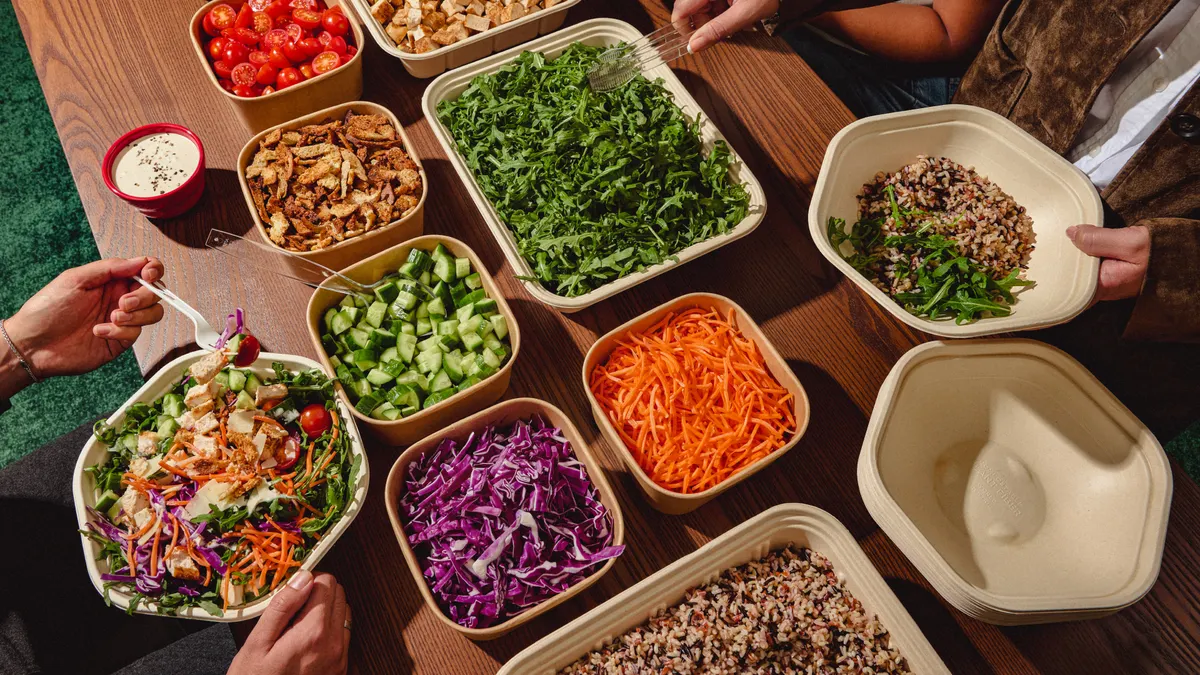
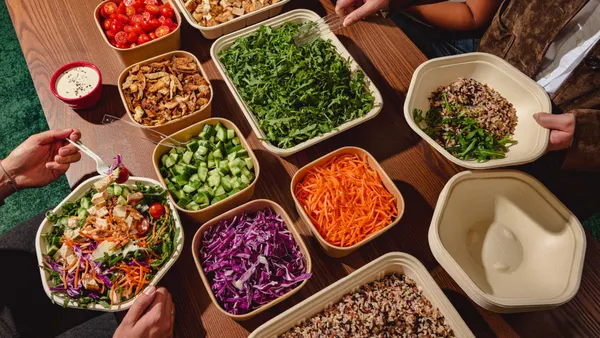
Menu strategy is another decisive factor. Catering menus need to be intentionally limited and designed for scale, consistency and delivery. Items that bundle well, hold temperature and require minimal customization tend to outperform more complex offerings.
“What is food that travels well? Food that bundles easily? Items that you can scale — where your operators won’t kill you if they have to turn it out 100 times,” Daus said.
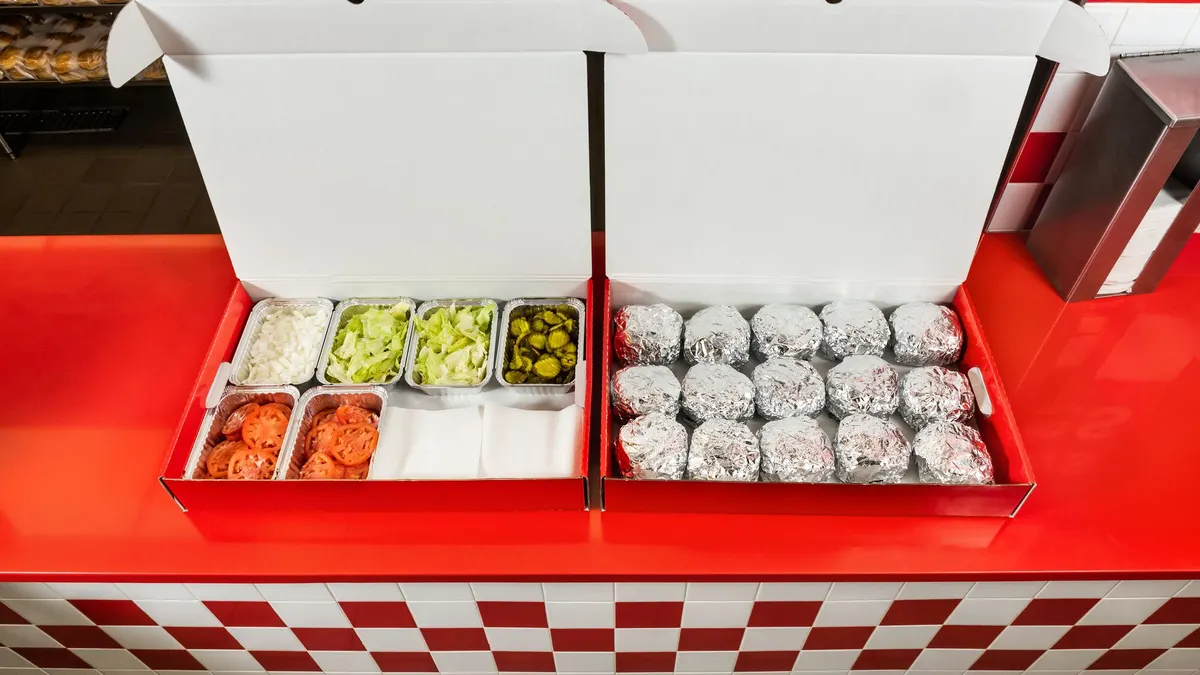
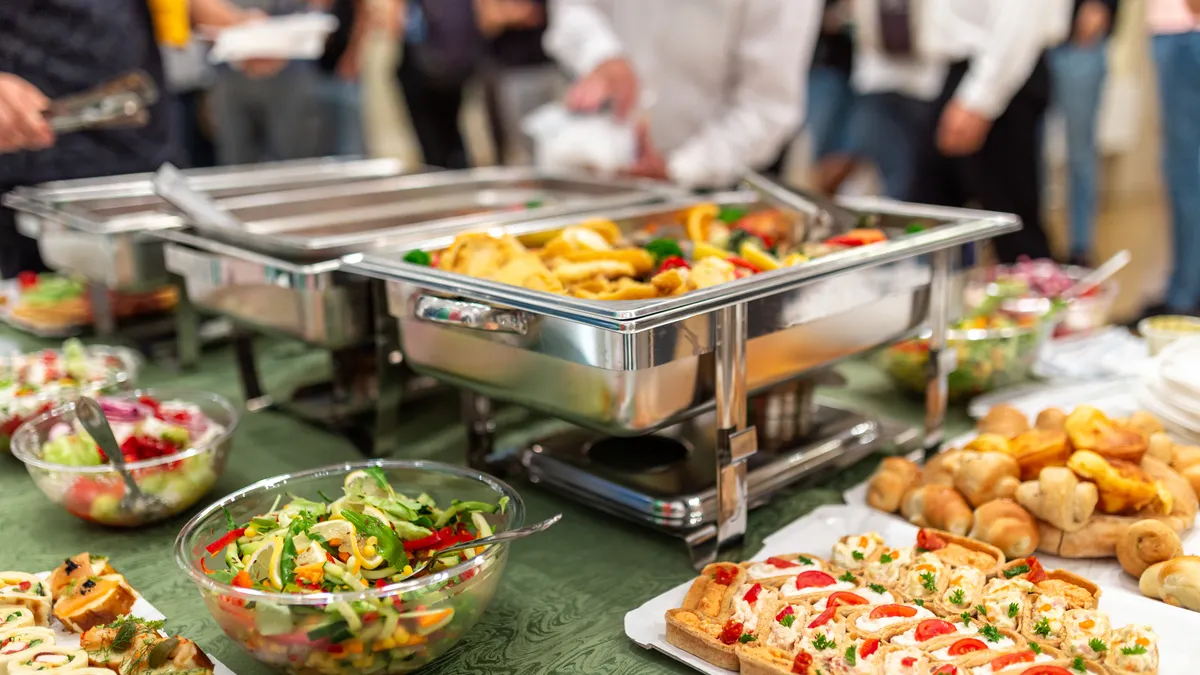
At Moe’s, buffet-style options such as taco, fajita and nacho bars are top sellers, while box lunches are used for schools, churches and medical offices. The brand invests heavily in testing, sometimes giving food away to understand how it holds up during transport, unpacking and setup, Smith said.
“It’s very different to produce something in a restaurant that you serve instantly versus packaging something that gets in the car and rides for 20 or 30 minutes,” Smith said.
Logistics and infrastructure often determine whether catering is scalable. Proper packaging, staging space, storage and delivery planning are essential, particularly for large orders that third-party delivery platforms may not be equipped to handle.
“If somebody orders 200 sandwiches, how are you going to actually deliver those items to a site?” Gordon said.
Outreach to prospective customers is crucial to success. Operators that rely solely on inbound orders tend to plateau, while those that invest in dedicated ordering platforms, proactive outreach and account management drive higher repeat business. Moe’s has catering service managers to maintain customer databases, revitalize lapsed accounts and build relationships during deliveries and on-site setups.
Those touchpoints, Smith said, do more than secure repeat business — they also function as brand marketing. When someone orders catering for an office or event, they are effectively introducing the brand to dozens of potential new customers at once.
“There’s no better way to get that first customer experience than catering,” Smith said.
For restaurant executives, the takeaway is clear: catering can be a powerful growth engine, but only when it is treated as its own business with dedicated resources, guardrails and accountability.
“If you can figure out how to do it well, you should do it,” Reinstein said. “But go into it prepared, not chasing revenue.