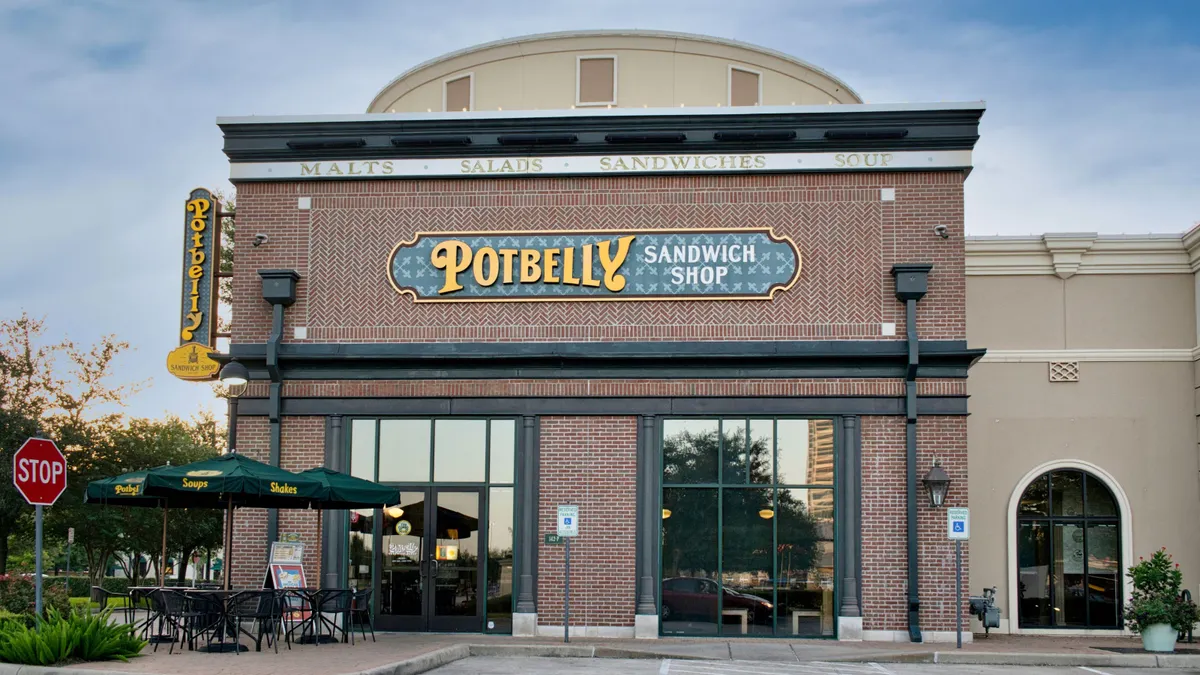
Jennifer Durham is excited about Potbelly’s future under RaceTrac, which bought the sandwich company this year for $566 million. Durham, who joined the chain during the fall as senior vice president of franchising and development, expects significant opportunities for growth, scalability, returns on investment and franchising.
Potbelly remains focused on reaching 2,000 units over time. Its store footprint currently includes over 450 restaurants, and the company has about 400 commitments for new units, Durham said.
In 2026, Durham expects Potbelly to surpass 500 locations and to be a $650 million business. This year, Potbelly will have opened over 30 new restaurants, compared to 23 in 2024. She expects to open 50 shops next year and another 100 in 2027.
“We’ll continue to grow at the 100-plus clips so that we can achieve that 2,000 number sooner rather than later,” Durham said.
While there’s nothing wrong with being a public company, it can come with additional expenses and requirements that create limitations, Durham said. Expectations are also high and Wall Street tends to prefer short-term results as earnings are reported every quarter.
“We’re going to continue to grow and do all of the things that made the brand amazing and do them better without all of the distractions that came along with being a public company,” Durham said.
As a private company, there is less pressure to deliver short-term results and Potbelly can focus on long-term sustainability, she said. Even private equity firms often have a specific timeframe for their investments and prioritize short-term decisions, she added. But RaceTrac is aligned with Potbelly’s long-term plans.
“There’s no desire to do anything that isn’t good for the long term,” Durham said. “RaceTrac has no intention … to do anything that would be disruptive to the Potbelly business.”
What Potbelly’s growth will look like
RaceTrac doesn’t plan to put a Potbelly shop in every one of its c-store locations. But, if there is an overlap between Potbelly and RaceTrac customers, then the sandwich concept could be considered for a co-development location.
“It would be really advantageous from the return on investment for us to consider that where it makes sense,” Durham said.
Durham said her biggest focus will be to improve return on investment and shop profitability, while growing both franchised and company-owned locations. This growth will include opening more shops with a smaller footprint.
In 2024, Potbelly unveiled a prototype of 1,800 square feet, about 500 square feet smaller than its legacy stores. That prototype included new furniture, interior design and the Potbelly Digital Kitchen, which manages the digital off-premise transactions that made up 40% of orders in 2024.
Potbelly also has other non-traditional shops that do tremendously well in airports, universities and central business districts. Its location in the Dallas-Fort Worth airport is a high-performing location, for example. Non-traditional units also act like billboards for the brand, introducing it to new customers, particularly travelers, who may not be aware of the concept, Durham said.
Potbelly will also continue to fill out markets where it has a company–operated presence like Columbus, Ohio; Dallas; Houston; Chicago and Colorado, she said. It will continue to work with experienced franchisees.
“Having skin in the game and a sizable number of shops that we operate gives us that view and perspective to manage the business in a way that isn’t disconnected and it just really keeps us grounded,” Durham said.
Shared company resources
As part of RaceTrac, Durham expects Potbelly to have more scale and buying power. Shared expenditures could allow the two brands to bundle and leverage purchasing power, which will “ultimately be great for our initial investment and allow us to have a better return,” Durham said.
She expects Potbelly to leverage its digital and off-premise business, especially its catering, to help drive volume into the shops that can contribute additional margin and profitability.
Earlier this year, Potbelly added ProfitKeeper, a franchise analytics tool, to its system to allow for franchisees to better understand benchmarking data that can help boost profitability. That tech has been rolled out to about 90% of its system this year, Durham said.
“The sentiment from franchise owners about the [ownership] change is largely positive,” Durham said. “They see it as a real advantage.”
Having RaceTrac as its owner will also allow Potbelly to provide more resources to its franchisees, Durham said. RaceTrac opened its 600th location this year and has teams that manage construction, design and real estate that could also help Potbelly operators.
“We can actually do more than we could before, in terms of support day to day,” Durham said. “We'll continue to add resources as we add franchise locations and add new franchisees.”
Franchisees of RaceTrac’s franchised division, Raceway, could potentially enter the Potbelly system to diversify their portfolio with standalone restaurants, Durham said. Most of Potbelly’s franchisees are experienced restaurant owners. For example, one of its newest franchisees own Wendy’s restaurants and is expanding with Potbelly since the sandwich chain doesn’t violate their non-compete agreement.
Durham said Potbelly also offers a high average unit volume compared to other sandwich brands and she would love to see AUVs grow to $1.7 million.
“I don’t know that we’re always top of mind, but we should be [with] $1.3 million average unit volume,” Durham said.