With 30 dual-branded Applebee’s/IHOP restaurants open in the U.S. and another 50 expected by the end of this year, Dine Brands is well on its way toward reaching its 900-unit, dual-branded restaurant goal within the next decade.
But it could well surpass that goal as it adds non-traditional channels to the mix. While its current planned units consist of 450 traditional ground-up builds where there isn’t an Applebee's or IHOP and 450 conversions of single-branded restaurants, units that open in airports, universities and hospitals aren’t included in that total, according to Dine Brands CEO John Peyton.
“We think there's a lot of potential for this in terms of geography, market fit, guest reaction, as well as the economics for the owners,” Peyton said.
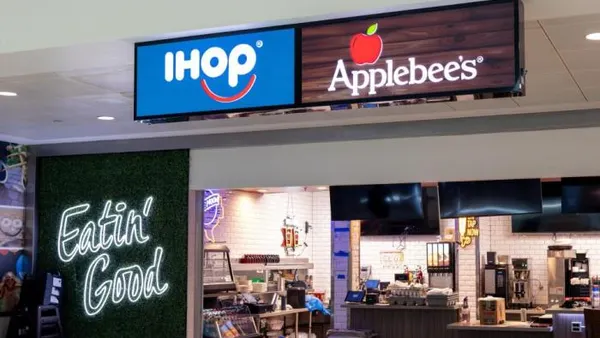
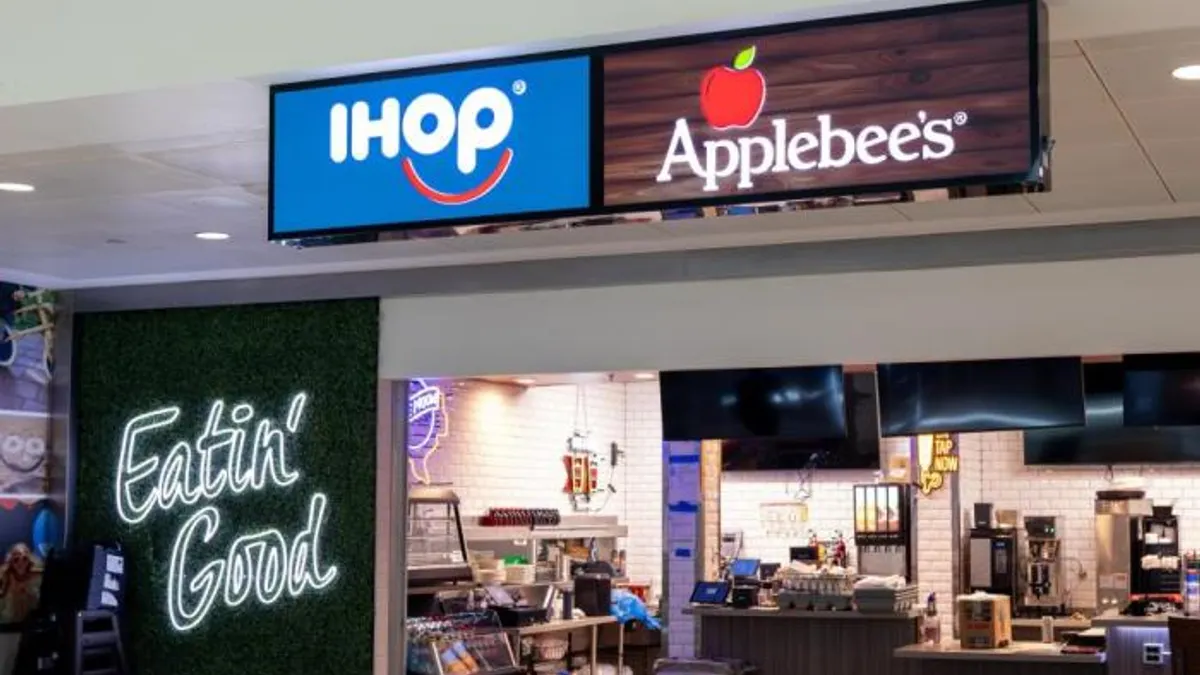
Earlier this year, the company opened its first airport-based, dual-branded restaurant in the Dallas Love Field Airport and has two other locations open in travel centers, one in Texas and one in Washington, Peyton said.
Airports have additional requirements and typically offer spaces with limited seating. These locations need a menu mix for morning and afternoon and evening as well as grab-and-go.
Dine also has food that travels well. It already has a robust off-premise business, with about a quarter of each brand’s sales coming from this channel. The chains have become much more skilled in packaging food for off-premise occasions to maintain quality. IHOP’s packaging has pancakes separate and above eggs and proteins, for example.
Dine has a team dedicated to non-traditional growth of the dual-branded units, working closely with airport concessionaires and getting to know the request for proposal process, Peyton said.
“We think this is an extremely compelling proposition for an airport because of the all-day a.m. and all-day p.m. menu,” Peyton said of the dual-branded restaurant concept.
The company also sees universities, medical campuses and other locations with a large 24/7 population as being potential targets for non-traditional growth.
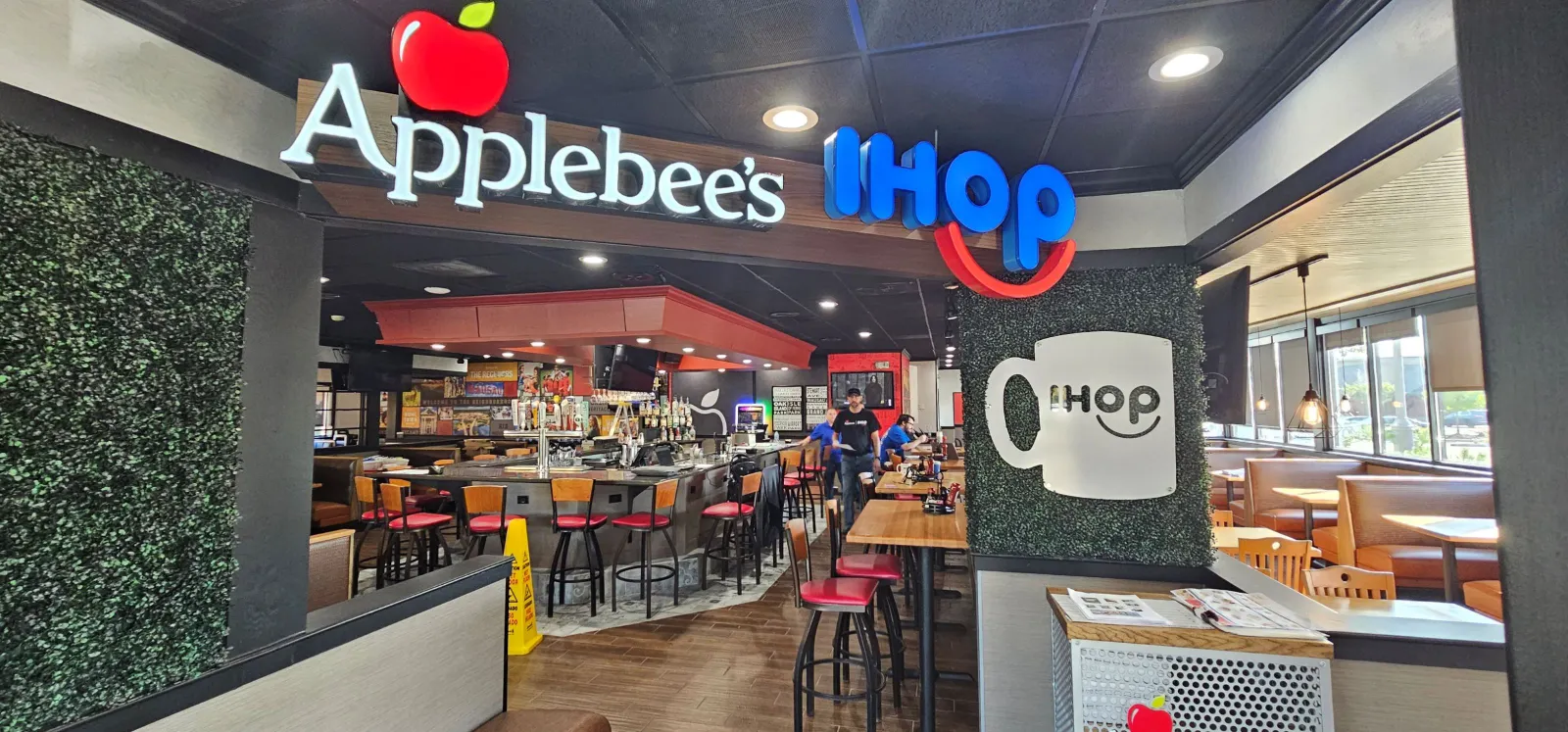
The success of dual-branded restaurants
Even as it works toward reaching 80 units by the end of this year, Dine continues to refine these restaurants, including by making sure the equipment and layout of the kitchen reflect the patterns of Applebee’s and IHOP orders, he said.
Dine continues to train IHOP franchisees who are running a bar for the first time how to maximize revenue and create a vibe that’s important to a bar-centric restaurant. It’s also working on how the dual-branded restaurants show up online and on third-party sites.
Dine is optimizing the menus at these restaurants, as well, taking the best of both brands. Instead of offering burgers from both brands, for example, it has burgers from Applebee’s. It also offers items exclusive to these restaurants that combine elements of IHOP and Applebee’s, like the Loaded Buffalo Chicken Omelette, which is the best-selling omelette at these units.
“We’re getting to a real critical mass and scale in proving out the concept,” Peyton said, adding that dual-branded restaurants are producing revenue 1.5 to 2.5 times greater than a single-branded restaurant.
This additional revenue opportunity is particularly compelling as casual dining restaurants face headwinds from traffic declines as consumers pull back on spending. Applebee’s same-store sales were down by 0.4% during the fourth quarter, while IHOP’s same-store sales increased by 0.3%, according to an earnings release.
Sixty-two percent of tickets at the dual-branded restaurants include both IHOP and Applebee’s items, meaning guests are coming to enjoy both brands and not just one or the other, Peyton said.
“That’s the epitome of the definition of innovation, that we are giving guests something they didn’t know they wanted,” Peyton said. “No one came to us and said, ‘please put Applebee's and IHOP under the same roof.’”
The first part of its plan was to test dual-brands internationally where IHOP and Applebee’s are less well known and less risky to test as a combination restaurant. Those restaurants did so well that Dine decided it could bring the concept to the U.S.
“By adding $1 million or $2 million to the AUV of these existing restaurants, it changes the economics to a much more compelling value proposition that looks a lot more like what the restaurants were producing at the bottom line 15 years ago,” Peyton said. “Dine Brands is the only company that happens to have a premier a.m. brand and premier p.m brand to put together. So that's a great barrier to entry [for competitors].”