Interest in artificial intelligence is growing for restaurants as operating costs rise and new technologies, like drive-thru voice automation and AI-powered marking analysis, mature.
About a quarter of restaurants are using some form of AI, according to the National Restaurant Association. Major restaurant players are working with AI firms, like Nvidia, to develop new technology and expand use cases.
This report includes stories that explore how AI is shaping the restaurant industry, from automated managers to phone-answering technology, including:
The NRA’s study of prevalence and adoption of AI
How AI can help analyze orders and drive frequency
Wendy’s efforts to roll out drive-thru AI at hundreds of restaurants
Yum Brand’s plans for AI to ramp up company growth
Why Culver’s is adding computer vision to 1K restaurants
Marketing is the top area where automation is being used, followed by administrative tasks, according to a National Restaurant Association report.
By: Julie Littman• Published Feb. 18, 2026
Twenty-six percent of restaurant operators say they are using artificial intelligence-related tools at their restaurants, according to the National Restaurant Association’s State of the Restaurant Industry 2026 report released in February.
Marketing is the top area where AI tools are being used: 19% of full-service operators and 15% of limited-service operators said they use AI to assist with marketing. Ten percent of operators are using a version of the technology for at least some administrative tasks.
Despite the lack of adoption of AI for ordering, customers are increasingly comfortable using technology like smartphones, websites, kiosks and tablets at the table to order from a restaurant, according to the report. Roughly six in 10 millennials and Gen Z adults said they would place an order with an AI-generated bot. A majority of Gen Z adults said they are also open to food delivery by robots or drones.
Operators will continue to invest in technology as it has become an “essential asset,” as they face increased operational costs and constrained consumer spending, according to the NRA.
“[Technology’s] strategic application is transforming the industry — making operations faster, smarter, and more agile than ever before. In an economy where food and labor costs are rising steadily, breakthrough efficiencies could make the difference between struggling and staying profitable,” the association wrote in its report.
A majority, 60%, of operators said their technology use is roughly in line with competitors, while 12% say their technology is at the leading edge. The remaining 28% said their technology use is lagging, which could pressure them to adopt new solutions, as a wide majority of operators say technology provides a competitive advantage.
Six in 10 operators say they plan to invest more in technology to enhance the customer experience, per the NRA. Over half said they will invest in equipment or technology that can help productivity and efficiency within the front of house, while just under half said they would use tech for the back of house.
Article top image credit: bankkgraphy via Getty Images
The many faces of automation at the NRA Show
This year artificial intelligence appeared in forms ranging from a cat-eared delivery robot to a generated analytics dashboard.
By: Aneurin Canham-Clyne• Published June 5, 2025
Artificial intelligence, robotics and automation have been hot topics for years in the restaurant industry. For a long time, the Platonic ideal of AI-powered equipment was something like Flippy, a robotic arm that mixed industrial technologies with traditional restaurant equipment like fryers. But for some, AI applications like that have failed to live up to expectations. Real-world automation in restaurants now takes many forms, too — some of which are difficult to immediately recognize as AI.
“Last year when you came [to the Show] everyone was talking about AI, AI, AI. Most of that was vapor, in my opinion,” said Bryan Solar, chief product officer at SpotOn, a POS solutions firm.
Now, vendors and restaurant brands are more focused on the outcomes driven by AI and automation, rather than the flash of physical innovations, Solar said. Those results-driven technologies might look very different from robot arms, though the National Restaurant Association’s show floor still had its share of those, too.
Check out the different types of restaurant automation Restaurant Dive spotted at the NRA Show.
Automated managers
One major application for AI and automation in restaurants is tasks traditionally undertaken by managers, including recordkeeping and data analysis.
Callin Godson-Green, a food safety CS manager at SmartSense by Digi, said during a show floor session that automated monitoring and recordkeeping for equipment — like temperature checks for fridges — could help improve safety and reduce breakdowns.
“Manual checks are labor intensive,” Godson-Green said. This issue can be complicated by inaccurate or incomplete recordkeeping. “A majority of the time, you have no idea who completed that log. It's a scribbled-in temperature. They don't sign it. How can we improve that?”
SmartSense, and other automated systems that detect when equipment is falling out of compliance or nearing a breakdown, can alert managers pre-emptively, reducing spoilage and downtime. For example, Godson-Green cited gradual increases in temperature in a fridge as a red flag.
Other data-intensive tasks are also ripe for automation. Solar highlighted SpotOn’s new Profit Assist tool, which analyzes the data in a restaurant’s accounting system, like QuickBooks or R365, to find cost savings that might escape all but the most careful and methodical hand checks of data.
Solar said a SpotOn customer used the tech to automatically detect and flag double-billing by a linens vendor, saving $2,000 a month.
“Is it really sexy to say, ‘I found out you're getting overcharged on your linens’? Maybe not. You're not going to make a billboard for that, but if you're a restaurant, you found $2,000 a month extra. That matters a lot,” Solar said.
Profit Assist is also capable of detecting anomalies in costs across units so operators can automatically identify outliers in categories like labor allocation or cost of goods sold and take steps to remedy such problems, Solar said.
Task-specific equipment
Some of the automation firms at the NRA Show were there to solve very specific operational problems comprising a fraction of a worker’s tasks, rather than act as managers.
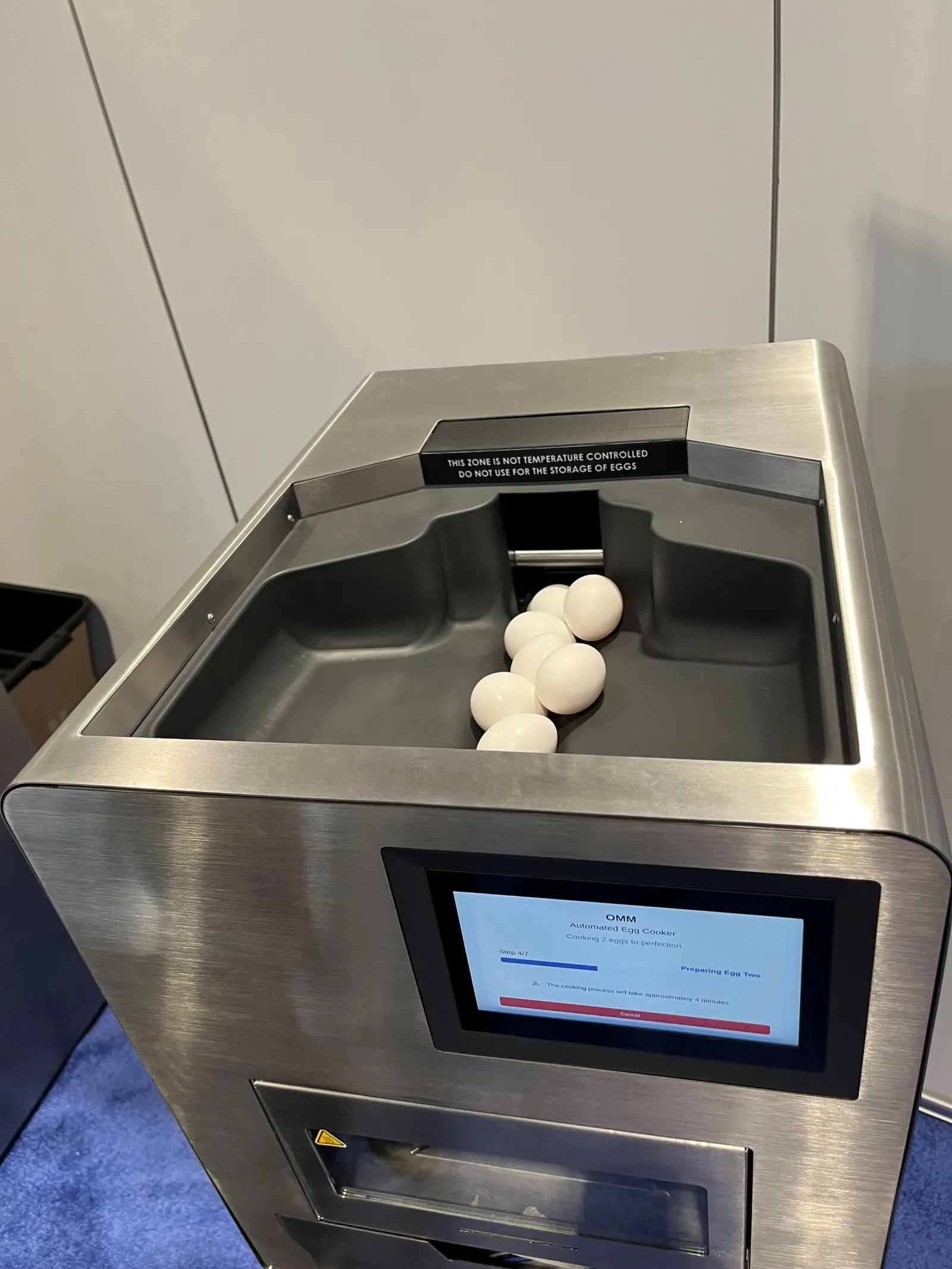
One such machine was Bridge Appliances’ automated egg cooker. Lance Lentini, the founder and CEO of Bridge, said the idea for an egg cooker came from watching production problems at coffee shops during the commute hour.
Eggs in a hopper on Bridge Appliances’ automated egg cooker.
Aneurin Canham-Clyne/Restaurant Dive
“We saw basically the biggest bottleneck behind the counter being preparing for cooking or reheating eggs,” Lentini said.
The machine can organize 30 eggs, crack them and cook them two at a time, producing sunny-side up eggs that are over easy, medium or hard, depending on programmed settings. Lentini claims that the machine takes less time to cook fresh eggs than other methods.
Lentini pitched the machine as a way for small coffee shops to expand their menus without significantly increasing labor costs.
“The average customer that comes in to buy an $8 cup of coffee is now going to add an $8 breakfast sandwich to the purchase ticket,” Lentini said.
Robot generalists
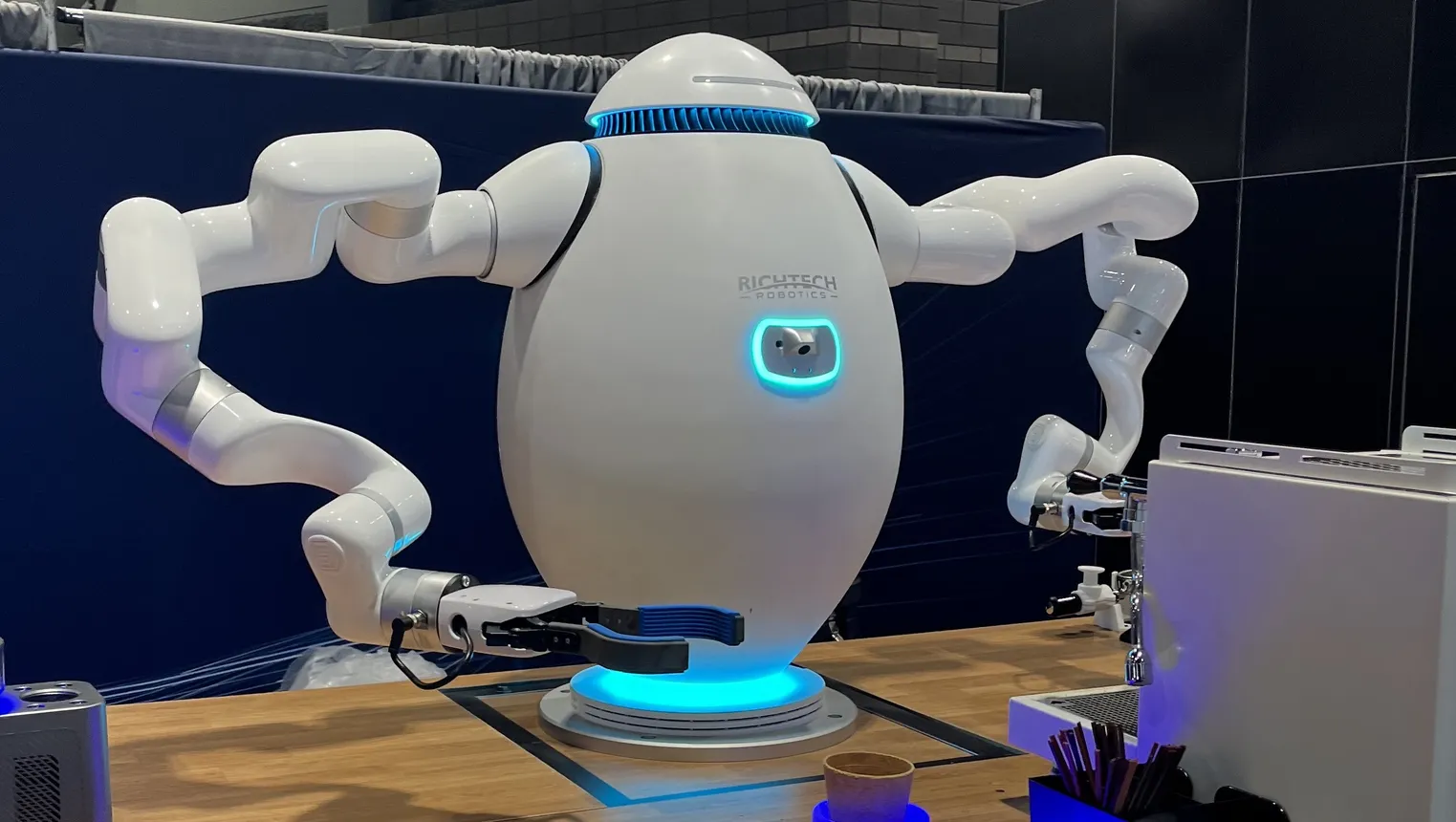
Outside of hyper-specialized pieces of equipment, the Show played hosts to robots that could fulfill more than one task. One such device is Richtech Robotics’ Adam device. At the show, Adam was programmed to operate as a barista, but Tim Tanksley, Richtech’s director of marketing, said the machine could be programmed to work with a variety of equipment.
A voice playing at the booth — ostensibly the robot’s — claimed it could make “coffee, shakes, cocktails, boba tea, grill burgers, cook noodles or [perform] any countertop task,” for which it was trained.
“The training involves the creation of the menu and then programming the movements, and then a little bit of training with the vision,” Tanksley said. The bot, Tanksley noted, can connect to point-of-sales systems and start on orders as they come in.
Adam, a robot made by Richtech Robotics, shows off its barista skills.
Aneurin Canham-Clyne/Restaurant Dive
Such robots would replace workers covering a multitude of tasks, rather than automating one specific procedure. Other general-purpose robots are less ambitious, but still serve functions beyond cooking one menu item in one particular way.
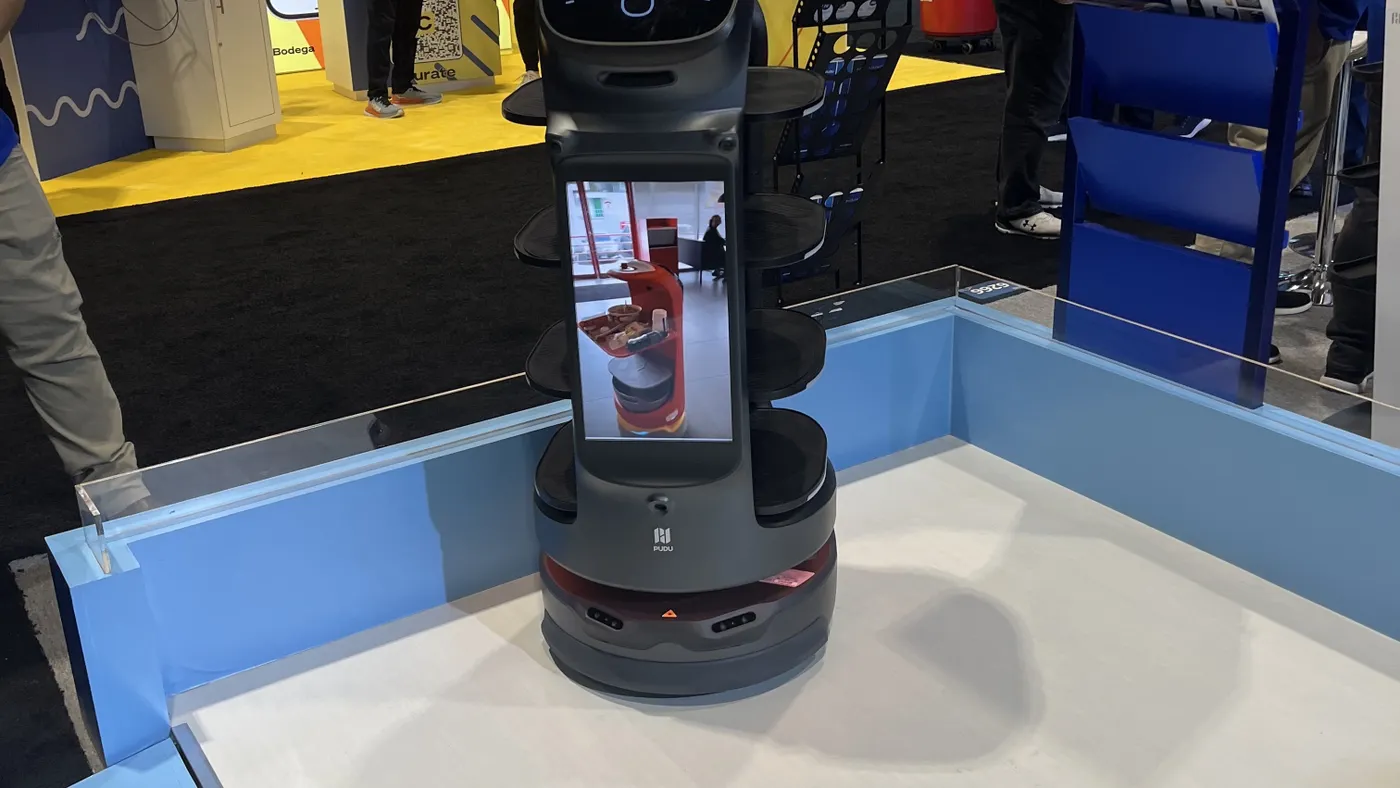
Pudu Robotics showed off the Bella Bot Pro, an update to its delivery robot, which serves as auxiliary waitstaff, bringing food and drinks to tables and carting away empty dishes.
The new version of Bella Bot features a video-advertising screen on the robot and AI-voice interaction capabilities, said Meg Timmons, Pudu’s marketing manager for the Americas.
Timmons said the robot could alleviate arduous and repetitive tasks, like carrying heavy dishes to tables or transporting dirty plates and cutlery back to a dishwasher. While something like the Bella Bot can’t do everything waitstaff does, Timmons said the robot has a variety of use cases.
“Our solutions are so flexible and scalable,” Timmons said, adding that some restaurants have to be flexible when integrating robots into their operations.
Timmons said consumer acceptance of these robots was beginning to increase in North America. Part of that might be due to the design of the Bella Bot, which has cat ears and makes feline facial expressions on a digital screen.
Voice AI
No part of the industry has seen as much automation buzz as voice ordering. Voice automation has been on the rise for years, but with Yum Brands and Nvidia putting significant resources behind drive-thru voice AI, it seems that mass adoption might be here.
In addition to labor savings, voice AI can be a way to prevent price sensitivity from eroding tickets, said Ben Bellettini, SoundHoud’s senior vice president of sales restaurants. This is made more powerful by large datasets on consumer purchasing habits which, Bellettini said, can ensure that bots are suggesting items consumers actually want.
“Some of our upsell acceptance rates are beyond double the acceptance rate that you typically see from a restaurant staff member,” Bellettini said.
SoundHound has tech, called Voice Insights, that can bridge the gap between voice AI and management AI.
“We have a system that can effectively collect conversational data between a team member and a customer,” Bellettini said. “There's a lot of operational data we can pass through that is voice-data based.”
That tech can analyze tones of voices and give employers greater control of the shop floor.
Palona AI, a phone-ordering AI firm, sees the emergent tech as a way to inject some degree of hospitality back into digital and phone ordering channels.
Many operators have “outsourced a lot of the other ordering to DoorDash or Uber Eats, and so you've been disintermediated from your customers, and you're no longer providing what feels like a hospitality service to people,” said Tim Howes, Palona’s co-founder and chief technology officer.
Palona is trying to change that by making a chatbot that sounds more human.
“We’ve spent a lot of time on trying to make the conversation fun and something you'd want to actually continue with,” Howes said. “We do that by imbuing more empathy and human likeness into the AI by training on top of large language models.”
The tech can also mimic brand characters or regional accents.
But the tech has limits, Howes said. It’s an odd user experience when a voice system remembers everything about a consumer from past conversations, and Palona has worked to ensure its system doesn’t creep consumers out by remembering too much. Instead, the phone ordering tool tries to mimic short-term memory, remembering the key information about a consumer and focusing mostly on remembering details within a given conversation.
With phone tech designed to mimic personalities, accents and even innocuous forgetting, the most realistic face of automation at the NRA Show might have been a disembodied voice, emanating from a phone speaker.
Article top image credit: Aneurin Canham-Clyne/Restaurant Dive
Fogo de Chão deploys AI phone system
The full-service chain has been leaning heavily on artificial intelligence to manage various elements of its operations to enhance the guest experience.
The technology is named after Selma Oliveira, Fogo’s chief culture officer, who the company described as its “matriarch” and one of “the most influential leaders behind the brand’s service philosophy.”
Selma voice assistant will answer calls across all 88 U.S. locations and help free up team members to focus on hospitality. Fogo is among a growing list of brands, including Five Guys, Red Lobster and Torchy’s Tacos, to adopt phone voice assist technology that ensures customers can place orders, get information from a restaurant and make reservations if the option is available.
The addition of Selma is part of Fogo’s growing strategy to incorporate more technology to support its hospitality. The company has been working with Bain Capital, which bought the chain in 2023, over the past two years to modernize its data platform, a process it expects to complete this year, Fogo CEO Barry McGowan told Restaurant Dive during the ICR Conference in January. That platform will be AI-enabled, and include bots that will help analyze consumer, reservation and social sentiment data, he said.
“All those foundational things we’re investing in marketing are really to focus on the pre-visit, the visit and the post-visit so we can personalize,” McGowan said. “This is what we’re doing with the data and marketing.”
He added that using AI and automation, particularly for marketing, will help the brand compete with larger chains that have bigger marketing budgets and have more brand awareness.
Selma voice assist can help with the pre-visit information. Oliveira’s voice was recorded in English, Portuguese and Spanish, allowing Fogo to connect with a diverse consumer base. The system can answer all U.S. calls, answer frequently asked questions, check availability and offer real-time reservations. It can transfer calls to in-restaurant teams if needed.
Fogo claims that early results have led to increased guest satisfaction, high booking completion rates and significant rewards enrollment. The system is expected to generate over 250,000 reservations within its first 12 months.
The full-service chain is also working on a handheld device — tied to its wait management system. That device will provide staff with information like guest preferences, favorite wines and birthdays to better personalize interactions. It allows guests to pay at the table, and connects to the rewards platform and gift cards, he said.
“It’s all about enhancing the guest experience,” McGowan said. “That’s what we want technology to do.”
Article top image credit: Courtesy of Fogo de Chao
Wendy’s to deploy drive-thru AI to over 500 restaurants this year
The chain has installed Fresh AI at over 160 units as part of its larger strategy to improve the customer experience.
By: Julie Littman• Published May 2, 2025
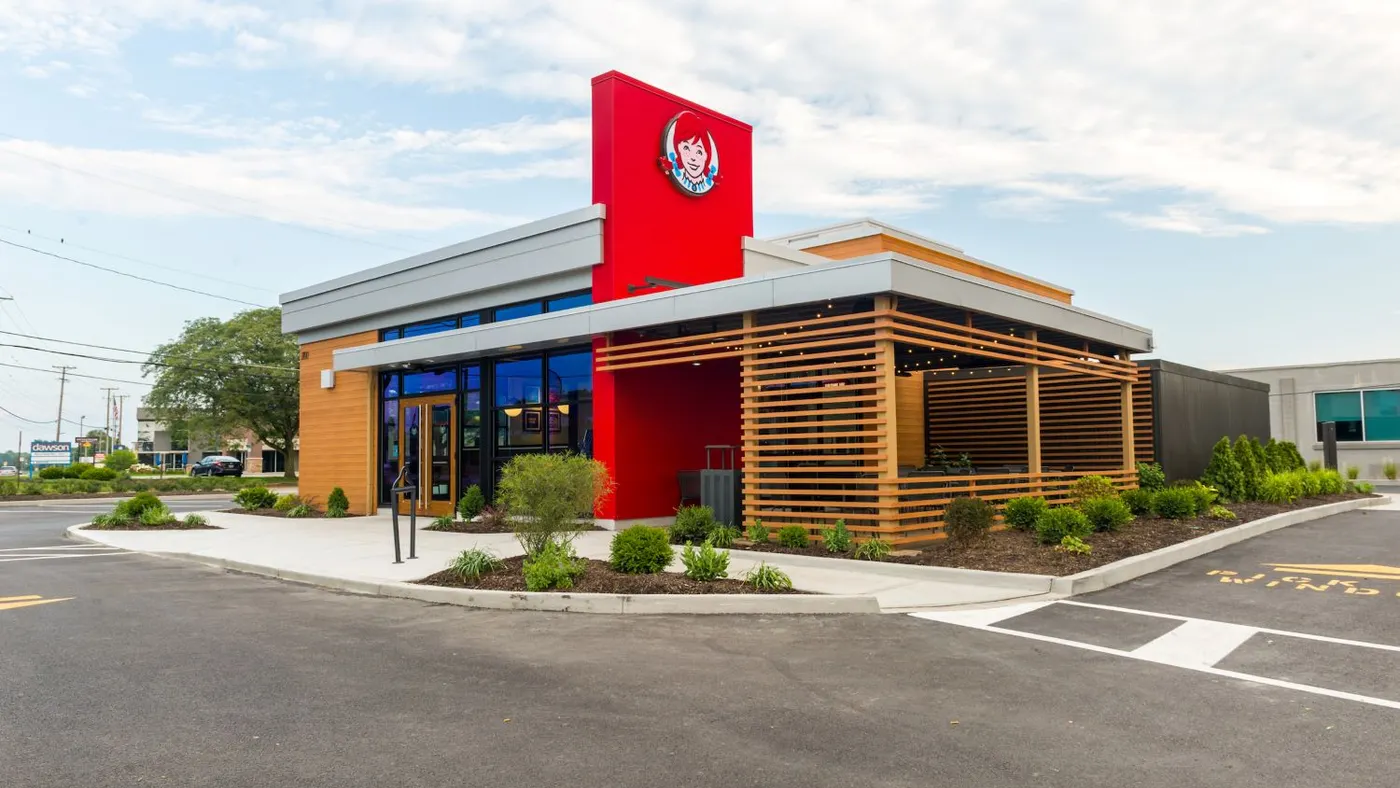
Wendy’s is on track to implement digital menu boards and AI drive-thru ordering systems at over 500 restaurants by the end of the year, President and CEO Kirk Tanner said during the company’s earnings call on Friday.
The chain's Fresh AI technology, which automates the drive thru ordering process, has now been deployed to over 160 restaurants across the U.S. The platform continues to improve through company enhancements and interactions with customers, CFO Ken Cook said during the earnings call.
Digital menu boards and automated drive-thru ordering is part of the chain’s strategic pillar to improve customer experience by providing more personalization, convenience and hospitality, Tanner said. Franchisees began piloting the technology in 2024.
The implementation of drive-thru AI is part of Wendy’s larger technology strategy that also includes enhancements to its app and an expansion of its loyalty program. These tools could help boost same-store sales, which were down by 2.8% in the U.S. during the first quarter.
Fresh AI, which Wendy’s began testing in 2023 in partnership with Google Cloud, offers suggestions based on a customer’s order that can increase check size, Tanner said. Additionally, the chain has seen improvements to order accuracy and efficiency in restaurants since employees can now focus on speed of service and delivering an accurate order.
Additionally, Wendy’s updated its app by adding gamification that’s engaging customers beyond the point of sale, Tanner said. The app can also now send digital messages to customers that are relevant to them.
“These updates are driving improvements across app engagement metrics, including conversion rate, which reached an all-time high in the first quarter and drove our digital mix to a record of over 20% of total sales,” Tanner said.
The chain is also rolling out two additional initiatives, menu item label printers and smart delivery scales, to boost order accuracy, which customers say is an important driver of satisfaction, according to Tanner. Menu item labels will ensure that sandwiches are customized per customers’ requests while delivery scales will make sure that customers receive all the items they ordered.
“In restaurants that utilize these tools, order accuracy is significantly improved,” Tanner said. “While we are still in the early innings of delivering on our promise of a perfect every time experience, we're already making progress, taking the right steps to reach our full potential.”
Article top image credit: Courtesy of Wendy's
Pizza Hut franchisee says AI caused $100M in damages
Chaac Pizza Northeast, which depends on DoorDash to complete its orders, said the franchisor’s Dragontail AI system hurt its delivery sales and damaged operations.
By: Aneurin Canham-Clyne• Published May 14, 2026
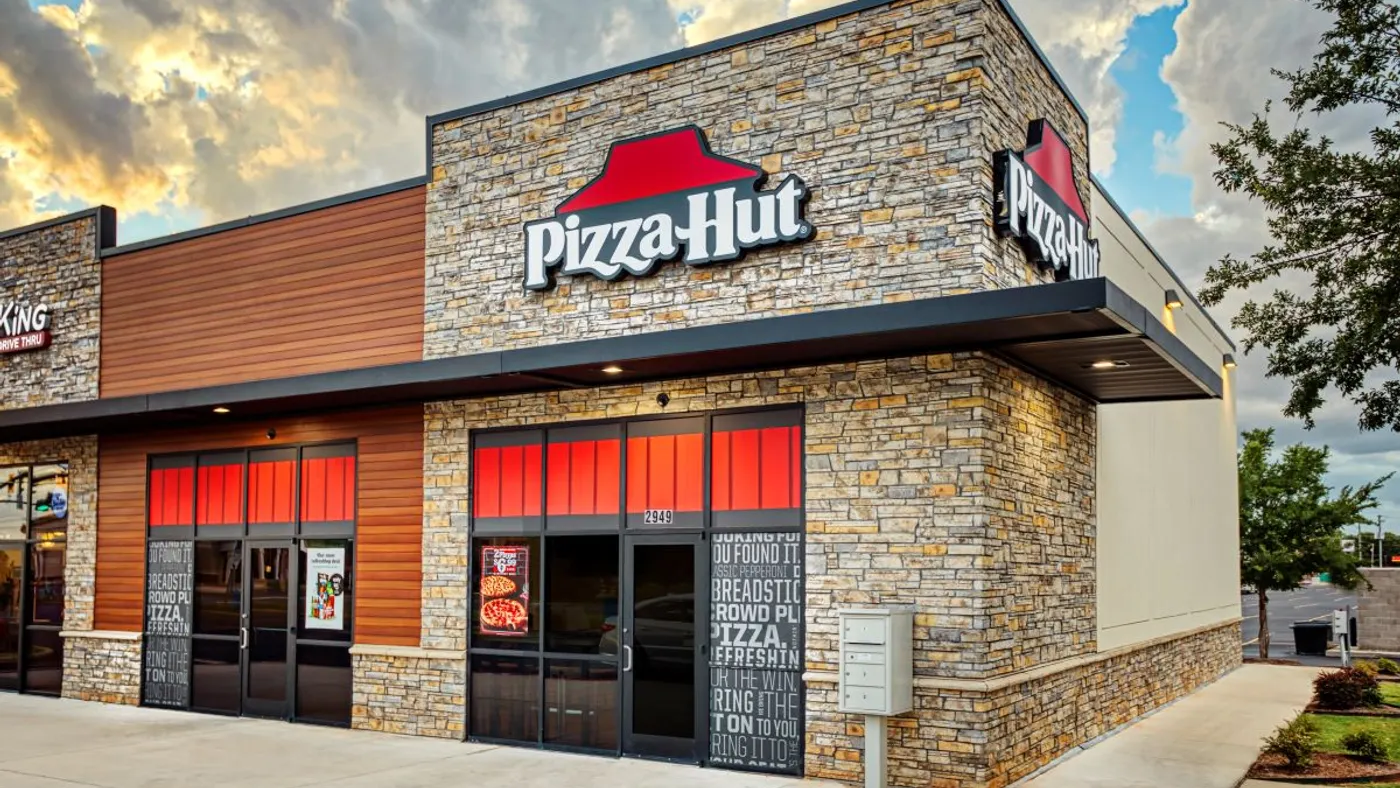
Pizza Hut franchisee Chaac Pizza Northeast has sued the franchisor, alleging the chain’s Dragontail Artificial Intelligence system caused “cascading operational breakdowns,” slowed down order times and disrupted integrations with third-party delivery, court records show.
In the lawsuit, which was filed in the Business Court of Texas First Division, Chaac alleges the Dragontail system causes a loss of business and enterprise value of around $100 million.
“We are in the process of reviewing the claim and will respond through the appropriate legal channels,” a Pizza Hut spokesperson said in an emailed statement, adding that the chain could not comment on pending litigation.
The lawsuit shows some of the potential difficulties posed by rolling out large technology solutions across thousands of stores.
As Pizza Hut’s parent, Yum Brands, and other QSR chains embrace AI, issues integrating the software with operations could undermine promised gains in efficiency.
Chaac, which operates about 111 Pizza Huts in New York, New Jersey, Maryland, Washington, D.C., and parts of Pennsylvania, was particularly dependent on third-party delivery carried out by DoorDash to sustain its sales. While Chaac’s stores represent less than 2% of Pizza Hut’s U.S. system, they accounted for 15% of DoorDash’s Pizza Hut volume from its Drive Program at one point, per the complaint.
The franchisee “exclusively used and relied upon [DoorDash]” for delivery orders at the time Dragontail was rolled out.
The rollout of Dragontail took place over several years, with its deployment in the New York market finishing in 2024. Prior to that, Chaac said it was one of Pizza Hut’s strongest-performing franchisees in terms of sales growth, delivery times and customer satisfaction.
Before Dragontail, Chaac’s managers “manually inputted [sic] the orders into DoorDash’s tablet, a software that enabled Chaac’s restaurants to process customer orders to DoorDash for delivery,” and the operator could prevent poorly-rated DoorDash drivers from accepting orders with it.
At the time “more than 90% of pizza orders at Chaac’s were delivered within thirty (30) minutes,” Chaac claims.
But Pizza Hut shifted towards a national contract with DoorDash, rather than individual operator agreements, the suit states. This, combined with the rollout of Dragontail, meant that DoorDash and its Dashers gained greater visibility into the franchisee’s pizza operations.
The integration of kitchen display, point-of-sale and third-party delivery management systems into a single software interface shifted power over delivery-order assignment from restaurant managers to delivery drivers.
Drivers now sometimes wait in the stores for up to 15 minutes to pick up multiple orders set to be ready in small periods of time. This led to an increase in delivery order times and in Rack Times — the period between a pizza leaving an oven and leaving a store — and an erosion in consumer satisfaction, Chaac alleges.
Dragontail was developed “to assist with in-house delivery drivers by providing insight as to the availability of DoorDash drivers in the event that in-house restaurant drivers were either not available or slower to deliver products,” according to the suit, making it a poor fit for Chaac’s DoorDash-dependent delivery model.
“With the intention to improve efficiency and service to the customer, Dragontail did the exact opposite; it caused significant delays and pummeled consumer satisfaction,” the suit states.
In Q3 2024, coinciding with the Dragontail deployment, the operator’s “New York City market—which had 10.19% sales growth year after year—dropped to -9.78%,” the complaint states.
Pizza Hut has struggled to grow its sales for some time, with the whole chain posting same-store sales declines going back to Q4 2023.
Yum’s tech strategy in recent years has hinged on leveraging AI for gains in efficiency and in analysis. Yum is working with NVIDIA to develop new AI use cases for fast food, and the company has modernized its technology and data analytics across much of its system in recent years.
But Chaac’s allegations, if substantiated, could show how centralization of technology benefits franchisors and tech firms, rather than necessarily strengthening individual operators, depending on franchisee business models.
Article top image credit: Courtesy of Yum Brands/Pizza Hut
Culver’s to add computer vision to 1K restaurants
Through a partnership with Berry AI, the fast food chain will use the technology to measure service execution, vehicle flow and throughput to improve accuracy and speed of service.
By: Julie Littman• Published May 1, 2026
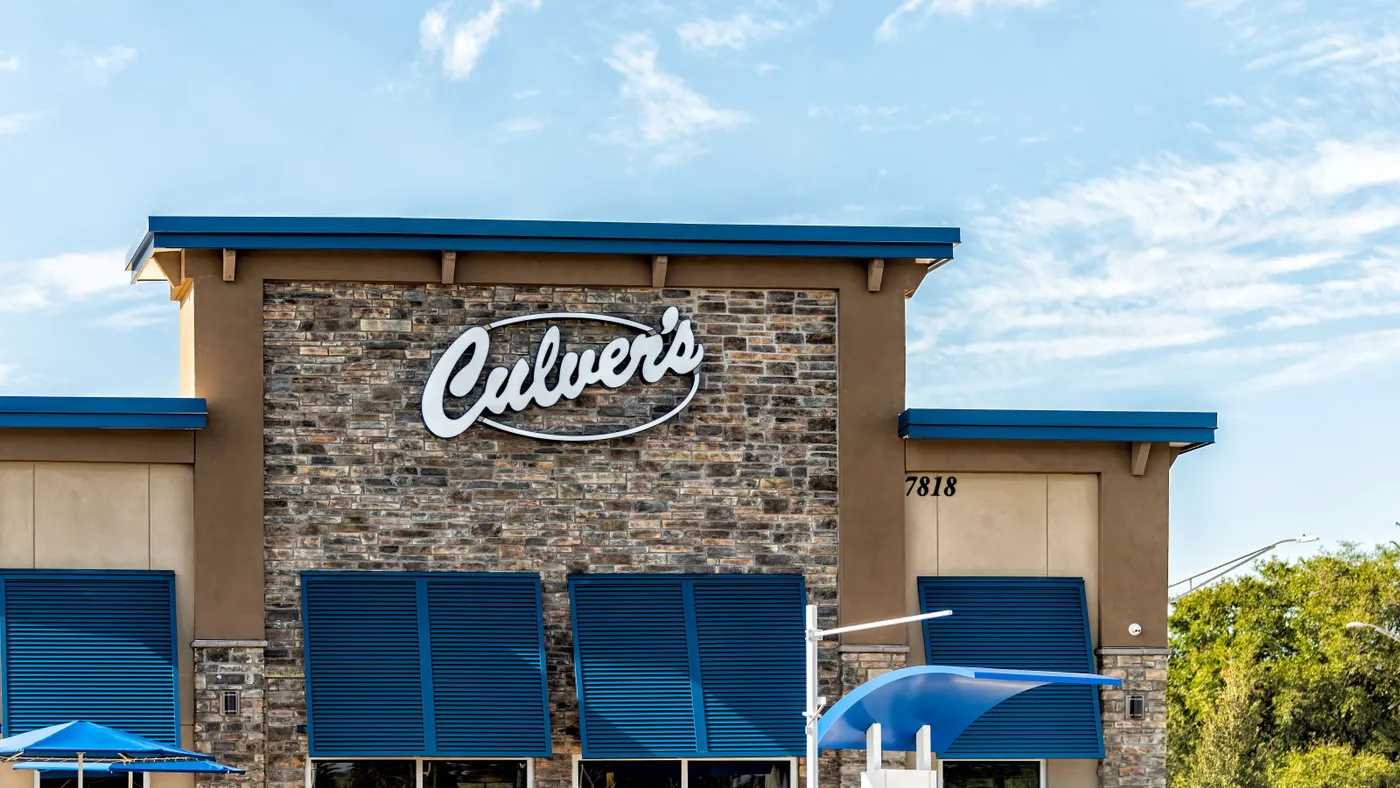
Culver’s has partnered with Berry AI to offer vision artificial intelligence across 1,000 restaurants nationwide, the companies said in a Friday press release.
The rollout will occur throughout this year, starting during the second quarter, Berry AI CEO Eric Lam wrote in an email.
Berry AI’s technology uses advanced camera vision to provide real-time measurements of service execution, vehicle flow, throughput and other performance metrics, the press release said. This technology includes a privacy framework to protect guests and team members, according to the press release.
“Berry AI’s vision technology will elevate our guests’ experiences by empowering our restaurant teams to make informed decisions that improve speed and ensure accuracy,” Rich Modjeski, Culver’s chief operating officer, said in a statement.
Franchisees will work with Berry AI’s onboarding and installation teams to help install hardware and configure any software, Lam said. Berry AI will also integrate with POS data at each location, offering operators additional insights on how specific menu items impact speed of service, he said.
“With these understandings [sic], operators can make more strategic decisions to optimize their operations by reducing customer wait times, reducing food waste, and aligning labor deployment more effectively,” he said.
Berry AI claims in the press release that its technology has led to up to a 70% increase in drive-thru comps and a 20% to 40% reduction in drive-thru times, while improving throughput by up to 20%
“Berry AI's work with over 1,000 locations previously has given us deep understandings of the different needs of front-line teams, and the needs of above store leadership,” Lam said. “Using those understandings to collaborate with Culver’s, we have been able to customize our powerful offerings to the specific needs of Culver’s operators, and the Culver’s brand leadership.”
Lam said some QSRs have been slow to adopt AI “due to misconceptions about cost and privacy.”
“Using AI-powered tools for QSRs empowers operators to run more efficient and profitable operations,” Lam said. “With food costs rising, and a general shift in QSR traffic, AI tools give operators and brand-level leaders the insight they need to compete at a higher level.”
Other chains have been exploring similar AI tools, including Portillo’s, which tested computer vision in 2025 to help improve drive-thru times. Berry AI partnered with Zaxbys last year.
More brands, including Wendy’s, Taco Bell,Bojangles and CKE, have largely focused on using drive-thru voice AI to free up employees to focus on hospitality. McDonald’s said it is looking into using various AI technology, particularly in the back of house, over a year after it ended its IBM drive-thru voice order test. However, AI has not always proven to be effective, and Taco Bell slowed down its drive-thru AI deployment last year after various issues arose during the ordering process.
Article top image credit: krblokhin via Getty Images
Yum Brands wants AI and beverages to supercharge growth
The company tested AI-arranged digital menu boards at Taco Bell and created a new KFC Global Innovation Pantry to transfer successful LTOs between markets.
By: Aneurin Canham-Clyne• Published April 29, 2026• Updated April 29, 2026
Yum Brands plans to deploy artificial intelligence through its Byte system and to use new menu innovation as ways to win new consumers and occasions, executives said on the company’s Q1 earnings call Wednesday.
At Taco Bell, Yum tested dynamically arranged drive-thru digital menu boards, which can use AI to change menu layouts and content on a car-by-car basis, CFO Ranjith Roy said.
At KFC, which is undergoing a brand turnaround, Yum has created a “global innovation pantry” to help the chain port successful LTOs and menu items from one market to another, CEO Chris Turner told analysts and investors.
Roy said the Taco Bell AI-arranged menu boards let the brand derive menu insights rapidly and make significant national adjustments. Taco Bell confirmed the menu board testing will not impact or change store pricing, in an email to Restaurant Dive.
This tool, Roy said, is the cumulative result of Yum’s long-running tech strategy.
“The seamless rollout of these new tech features has been made possible due to the physical and digital assets we have developed and deployed over the years, including the underlying integrated Byte technology and the physical investments in digital menu boards that we and our franchisees rolled out over several years,” Roy said.
Yum is planning similar AI-backed deployments across its other brands. The company is also testing a new kitchen display system powered by Byte, which Roy said results in efficiencies.
Menu innovation, alongside new tech, has long been a major priority for Yum, which operates spinoffs like Saucy by KFC and the Taco Bell Live Más Café as proving grounds for new food and beverage concepts. Saucy, for example, is helping KFC redevelop its sauces and tenders, Turner said.
The KFC global innovation pantry, a sort of flavor exchange program, is bringing greater flexibility to the brand’s menu design. The brand brought its Pickle Mania LTO concept from Canada to the United Kingdom through the innovation pantry, resulting in KFC U.K.’s most successful LTO ever, Turner said.
KFC is also deploying its Kwench beverage platform across a wide number of markets — the U.K., Australia and Canada — with more markets to follow. The U.S. is not necessarily at the forefront of KFC’s beverage innovation, and the market only accounts for about 12% of KFC’s systemwide sales, per the earnings release.
Value plays comprise a significant portion of Yum’s menu strategy, as well. KFC recently rolled out $7, $9 and $11 boxes similar to the Taco Bell Luxe Cravings bundles. In January, Taco Bell overhauled its value menu, adding more items and resulting in enviable performance.
“One-third of all Taco Bell tickets have an item from the [Luxe] value menu,” Turner said. “People are really building meals with a lot of variety using the value menu.”
Given that Taco Bell has served as the inspiration for much of KFC’s ongoing turnaround, similar value plays may be coming to the chicken chain, especially after a quarter of sluggish sales performance.
Yum’s brands again posted divergent same-store sales results in the U.S. in Q1 2026, with Taco Bell and the Habit Burger Grill seeing 8% and 5% growth, respectively, and Pizza Hut experiencing a 4% decline, according to the company’s earnings release. KFC U.S. saw system sales decline by 2%, but Yum did not provide an update on same-store sales for this market.
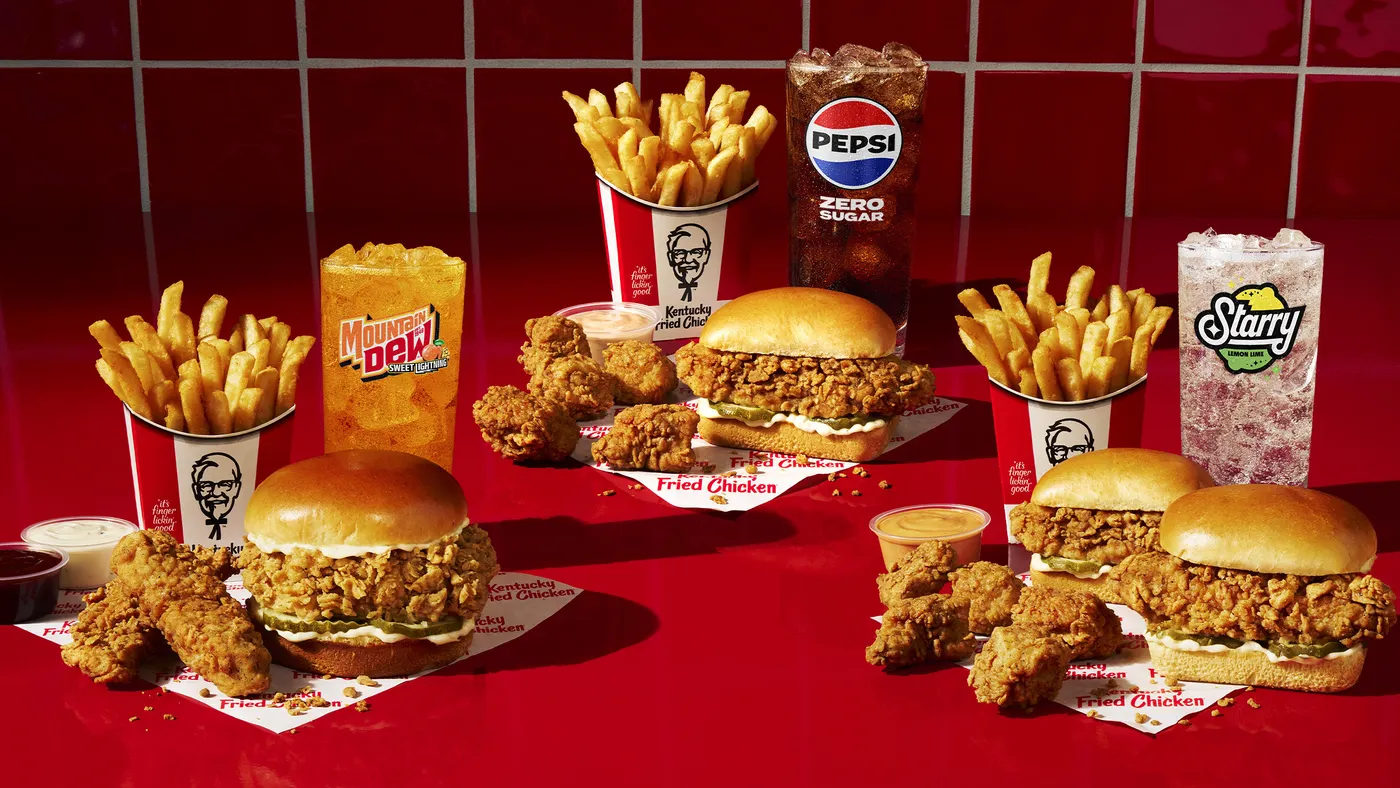
Article top image credit: Courtesy of KFC
How AI is shaping the restaurant industry
About a quarter of restaurants are using some form of AI, according to the National Restaurant Association. Major restaurant players are working with AI firms, like Nvidia, to develop new technology and expand use cases.
included in this trendline
Fogo de Chão deploys AI phone system
Yum Brands, Nvidia will deploy new AI at 500 restaurants
Dairy Queen expands drive-thru voice AI test
Our Trendlines go deep on the biggest trends. These special reports, produced by our team of award-winning journalists, help business leaders understand how their industries are changing.